Sauna Temperature & Safety: Is Sauna Safe for Everyone?
Sauna bathing can be a relaxing part of a wellness routine, but it isn’t necessarily suitable for everyone in exactly the same way. The heat can be intense, and your body’s response depends on several factors, including the type of sauna, sauna temperature, session length, hydration, recent physical activity, and your overall health.
For many healthy adults, sauna use can be an enjoyable experience when approached sensibly. However, certain health conditions, medications, and personal circumstances may require additional caution. Someone who feels completely comfortable in a sauna may have a very different response from someone who is new to heat exposure or has a condition that affects circulation, hydration, or temperature regulation.
This is why there isn’t one universal rule that says a particular temperature or session length is safe for every person. A responsible sauna routine starts with understanding the environment, choosing a manageable level of heat, and paying attention to how you feel throughout the session.
The goal should not be to tolerate the hottest possible sauna. A comfortable and controlled session is far more useful than turning heat exposure into a test of endurance.
Why Sauna Temperature Matters
Sauna temperature plays an important role in how your body experiences heat. As your body warms, blood vessels near the skin widen and sweating increases as your body attempts to regulate its internal temperature. Your heart rate can also rise during heat exposure.
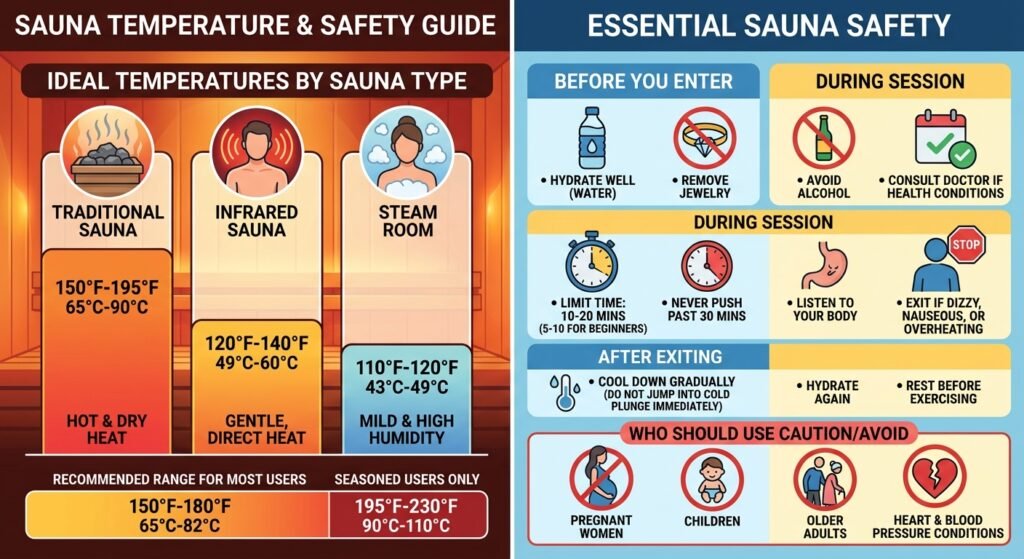
The experience can vary considerably depending on the sauna you’re using. Traditional saunas generally heat the surrounding air to a much higher temperature, while infrared saunas usually operate at lower air temperatures and use infrared energy to warm the body more directly.
That difference means the number displayed on a sauna thermometer doesn’t tell the entire story. Humidity, session duration, airflow, and individual tolerance can all affect how demanding the heat feels.
For that reason, choosing a sauna isn’t simply about finding the highest or lowest temperature. It’s about understanding the type of sauna and finding an environment that you can comfortably tolerate.
What Is a Comfortable Sauna Temperature?
There isn’t one temperature that works perfectly for everyone. Traditional and infrared saunas operate differently, and even two saunas of the same type can have different settings and recommendations.
Traditional saunas are generally associated with higher temperatures, while infrared saunas typically use lower surrounding air temperatures. A person who is accustomed to traditional sauna heat may find a lower-temperature infrared sauna comfortable, while someone new to sauna may prefer a more moderate setting.
If you’re a beginner, there’s no reason to start at the highest available temperature. A more comfortable setting gives you an opportunity to understand how your body reacts without making the first experience unnecessarily intense.
As you become familiar with sauna use, you can decide what feels appropriate for you. There is no requirement to increase the heat simply because other people use a higher setting.
Traditional Sauna vs. Infrared Sauna
The type of sauna makes a significant difference when discussing temperature and safety. In a traditional sauna, a heater warms the air inside the room. That hot air then transfers heat to your body. Traditional saunas can therefore create a very hot environment, especially when humidity increases.
Infrared saunas work differently. Instead of relying primarily on hot air, infrared energy warms the body more directly. The surrounding air is generally cooler than in a traditional sauna, which can make the experience feel different even though you’re still being exposed to heat.
Neither type should automatically be considered the best choice for everyone. Personal preference, experience, comfort, and health circumstances all matter. Someone who dislikes very hot air may prefer infrared, while another person may enjoy the traditional sauna environment.
If you’re comparing both options, look beyond the thermometer. The heating method, session length, humidity, and your own response to the environment are all worth considering.
For a detailed comparison, see Traditional vs. Infrared Sauna: Everything You Need to Know.
Does a Higher Temperature Mean a Better Sauna Session?
It’s easy to assume that a hotter sauna must provide a better experience. In reality, higher heat isn’t automatically better. A higher setting can make the session more intense, but intensity isn’t the same as effectiveness or comfort.
Your body has to work to manage the heat, and staying in an extremely hot environment for too long can make the experience unnecessarily difficult. The same principle applies to session length. A longer session isn’t automatically better simply because you’ve been able to tolerate it.
Instead, think about finding a temperature that allows you to remain comfortable and aware of how you’re feeling. If a moderate setting works well for you, there’s no need to increase the heat simply to match someone else’s routine.
Sauna should fit into your wellness routine rather than become a competition over who can handle the most heat.
Start Gradually If You’re New to Sauna
If you’re new to sauna, your first experience may feel more intense than you expect. Even if you’re comfortable in hot outdoor weather, an enclosed sauna creates a very different environment because the heat is concentrated and continuous.
Starting with a moderate temperature can give you time to understand how your body responds. You can notice how quickly you begin sweating, whether the heat remains comfortable, and how you feel after leaving the sauna.
There’s also no reason to copy the routine of someone who has been using a sauna for years. Experienced users may have developed a greater familiarity with the heat, while a beginner may need more time to find a comfortable routine.
Gradual exposure also makes it easier to recognize your personal limits. You can always adjust your routine later, but there’s little benefit in making your first sessions unnecessarily difficult.
Who Should Be More Careful With Sauna Use?
Sauna can be an enjoyable part of a wellness routine for many healthy adults. However, heat exposure does not affect everyone in the same way. When the body gets hot, blood flow to the skin increases and sweating begins. Heart rate can also rise as the body works to manage the heat. These are normal responses, but certain health conditions and medications can make heat exposure more difficult to tolerate.
This does not mean that everyone with a health condition must avoid sauna. The right approach depends on the specific condition, its severity, medications, and overall health. If you have an ongoing medical condition, it is worth speaking with a healthcare professional before making sauna a regular part of your routine.
It is also important to look beyond sauna temperature when thinking about safety. The length of the session, humidity, hydration, recent exercise, and your personal heat tolerance all contribute to the overall experience. A temperature that feels comfortable on one day may feel much more intense on another.
People With Heart or Circulation Concerns
Heat exposure can temporarily increase heart rate and change blood circulation. For many healthy adults, this is a normal response to heat. People with certain cardiovascular conditions, however, may need to be more cautious because their bodies may respond differently.
Someone with a stable condition may receive different advice from someone with a serious or unstable condition. That is why a general recommendation about sauna temperature cannot replace individual medical guidance. Your healthcare professional can consider your specific condition and determine whether sauna use is appropriate.
If you have a diagnosed heart condition or have recently experienced a cardiovascular problem, talk with your healthcare professional before using a sauna. The same applies if you’ve been advised to limit strenuous activity or avoid significant heat exposure.
Blood Pressure and Sauna Use
Heat can cause blood vessels near the skin to widen. This can temporarily affect blood pressure during and after a sauna session. Healthy adults often tolerate these changes well, but people with blood-pressure concerns should consider their individual circumstances.
Medication can also influence how the body responds to heat. Some medicines affect blood pressure, sweating, heart rate, or fluid balance. These effects may change how comfortable you feel inside a sauna and how well your body handles the heat.
If you take medication for blood pressure or another cardiovascular condition, don’t assume that one sauna temperature will be suitable for you. A doctor or pharmacist can provide advice based on your specific medication and health situation.
Pregnancy and Sauna Safety
Pregnancy is another situation that deserves additional attention. Pregnancy naturally changes circulation and the body’s response to temperature. Because of these changes, advice intended for healthy adults may not apply in exactly the same way during pregnancy.
If you’re pregnant and considering sauna use, discuss it with your healthcare professional first. They can consider your individual circumstances and provide guidance that is more appropriate for you.
This is also a good example of why there isn’t one universal sauna temperature that can be considered safe for everyone. Individual health circumstances matter, and professional advice is more reliable than copying another person’s sauna routine.
Dehydration Can Make Heat Harder to Tolerate
Sauna sessions commonly involve sweating, which means your body loses fluid. The amount can vary depending on the temperature, session length, humidity, exercise, and individual differences. Someone who has already been sweating heavily may find additional heat much harder to tolerate.
This is especially relevant after exercise. A workout can already increase body temperature and cause fluid loss. Going directly from an intense workout into a hot sauna may therefore create a more demanding experience than using a sauna when you’ve had time to recover.
Maintaining normal hydration throughout the day is a sensible habit. If you’ve been sweating heavily, feel unusually thirsty, or believe you’re already dehydrated, consider waiting until you feel recovered before using a sauna.
Hydration also doesn’t mean you should ignore other warning signs. If you become dizzy, weak, nauseous, or generally unwell, leave the sauna and move somewhere cooler.
Avoid Sauna When You’re Feeling Sick
Sauna does not have to be part of your routine every day. If you’re sick, unusually tired, dizzy, or generally feeling unwell, taking a break may be the better choice. Your body may already be dealing with additional demands from illness, and extra heat exposure may make you feel worse.
This is particularly important if you’re experiencing symptoms that affect hydration or temperature regulation. Instead of trying to maintain your usual sauna schedule, give your body time to recover.
The same rule applies once you’re inside the sauna. If you start feeling unwell, leave the room rather than trying to complete a planned session. A timer should never be more important than how you’re feeling.
Alcohol and Sauna Don’t Mix
Using a sauna after drinking alcohol is another situation to avoid. Alcohol can affect hydration, circulation, and judgment. Combining those effects with significant heat exposure can make it harder to recognize when you need to leave the sauna.
Alcohol can also make it easier to underestimate how the heat is affecting you. You may not respond to warning signs as quickly as you normally would.
For that reason, sauna sessions are best approached when you’re sober and able to pay attention to your body’s signals. If you’ve been drinking, wait until you’re fully recovered before using a sauna.
What About Children?
Sauna recommendations for children should not simply copy recommendations intended for adults. Children can respond differently to heat, and younger children may not recognize or communicate signs of overheating as clearly as adults.
If a child is going to use a sauna, follow the rules of the facility and seek appropriate professional guidance. Age, health, temperature, and exposure time can all affect whether the experience is appropriate.
A sauna designed for adults should not automatically be considered suitable for children. When there is uncertainty, professional advice is a safer choice than relying on general adult guidelines.
Certain Medications May Affect Heat Tolerance
Medication is another factor that deserves attention. Some medicines can affect sweating, blood pressure, heart rate, hydration, or the body’s ability to regulate temperature. These effects may influence how someone responds to heat.
This does not mean that everyone taking medication must avoid sauna. It means that general sauna advice has limits. Two people can sit in the same sauna at the same sauna temperature and have very different experiences.
If you’re taking regular medication and aren’t sure whether heat exposure is appropriate, speak with your doctor or pharmacist. They can consider the specific medication and your individual circumstances instead of relying on a general rule.
Listen to Your Body Instead of the Timer
A common mistake is treating the timer as the most important part of a sauna session. You might decide beforehand that you’re going to stay for a certain amount of time. Then, once inside, you may feel pressured to finish that time even if the heat becomes uncomfortable.
Your planned duration should never be more important than how you feel. If the heat becomes too intense, you can leave. There is no need to prove that you can tolerate a particular temperature or stay longer than someone else.
The same principle applies to sauna temperature. You don’t have to use the highest setting available, and you don’t need to match another person’s routine. Your tolerance can change from one day to another depending on sleep, exercise, hydration, stress, or illness.
When Should You Talk to a Healthcare Professional?
If you’re unsure whether sauna is appropriate for you, a healthcare professional can provide advice based on your individual circumstances. This is especially important if you have a medical condition, take regular medication, are pregnant, or have previously been advised to limit heat exposure.
It’s also worth asking for guidance before starting a new sauna routine if you’re uncertain about how your health may affect heat tolerance. A professional can help you understand whether any changes to temperature, duration, or frequency would be appropriate.
Simple Sauna Safety Tips
Using a sauna safely doesn’t require a complicated routine. Start with a comfortable sauna temperature and avoid pushing yourself just to stay longer. Give yourself time to adjust if you’re new to sauna use, and leave the sauna if the heat becomes uncomfortable.
Hydration also matters, especially after exercise or heavy sweating. Avoid using a sauna when you’re feeling unwell, dehydrated, or under the influence of alcohol. If you have a medical condition or take medication, speak with a healthcare professional before making sauna a regular part of your routine.
Signs You Should Leave the Sauna
Your body can give you clear signals when you’ve had enough heat. Dizziness, lightheadedness, nausea, unusual weakness, confusion, or feeling faint are reasons to leave the sauna and cool down.
You don’t need to complete a planned session. A timer is only a guide, not a target you must reach. Comfort and awareness should always come before session length.
Frequently Asked Questions
What is a safe sauna temperature?
There isn’t one temperature that is safe for everyone. Traditional and infrared saunas also operate differently. Beginners should choose a comfortable setting and avoid treating higher temperatures as automatically better.
Is sauna safe for healthy adults?
Many healthy adults can use a sauna safely when they follow sensible practices. This includes staying hydrated, avoiding excessive heat exposure, and leaving when they feel unwell.
Can I use a sauna after a workout?
You can include sauna after exercise if you feel well and have had time to cool down. However, intense exercise already increases heat and fluid loss, so avoid going straight into extreme heat when you’re exhausted or dehydrated.
Who should ask a doctor before using a sauna?
People with certain medical conditions, those taking medications that affect circulation or hydration, and people who are pregnant should seek individual medical advice before using a sauna.
Is a hotter sauna better?
Not necessarily. A higher sauna temperature creates a more intense heat experience, but it isn’t automatically better. Choose a temperature that you can comfortably tolerate.
Final Thoughts
Sauna can be an enjoyable part of a wellness routine, but safety should always come first. There is no single temperature or session length that works for everyone.
Pay attention to your health, hydration, comfort, and how your body responds to heat. If you’re unsure whether sauna is appropriate for you, professional medical advice is the best place to start.
Related Reading
- Benefits of Infrared Sauna for Recovery
- Traditional Sauna Benefits Beyond Relaxation
- Sauna Before or After a Workout? Benefits of Sauna After Workout
- How Long Should You Stay in a Sauna?
- Common Sauna Mistakes to Avoid
- Sauna and Better Sleep: Is There a Connection?
- Traditional vs. Infrared Sauna: Everything You Need to Know
⚠️ A Note for Our Readers
The information in this article has been researched using scientific studies and reliable health sources. It is provided to help readers better understand sauna temperature, heat exposure, and general safety considerations.
This content is for general educational and informational purposes only. It is not a substitute for professional medical advice, diagnosis, or treatment. Everyone can respond differently to heat.
If you have a medical condition, take medication, are pregnant, or have concerns about sauna use, please consult a qualified healthcare professional before using a sauna.