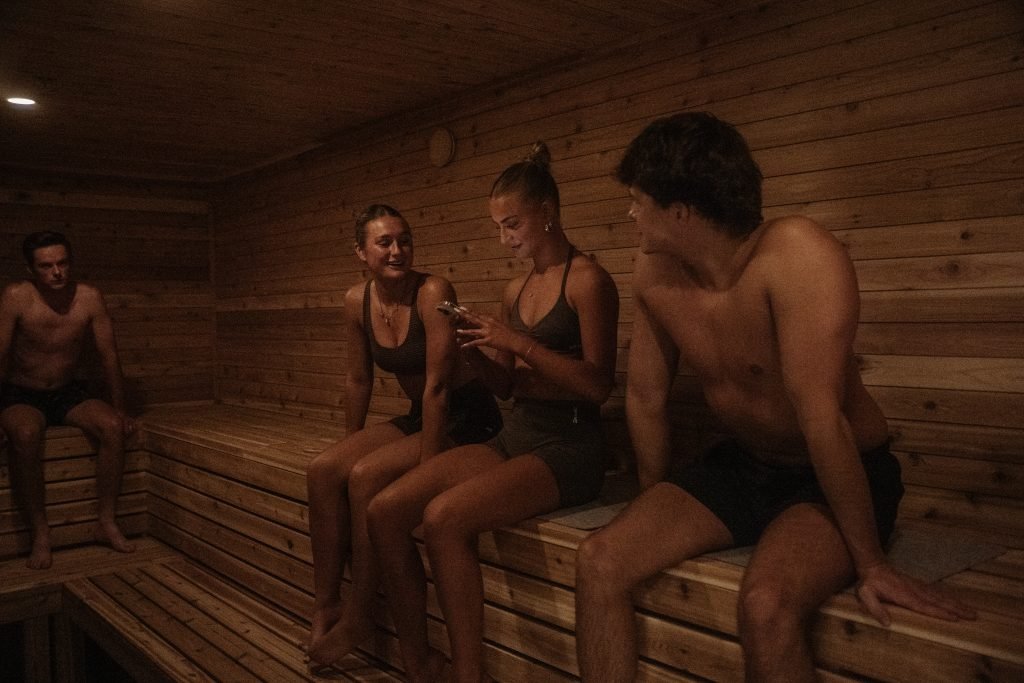
Recovery Is More Than What Happens After a Workout
When people talk about recovery, the conversation often focuses on what happens immediately after exercise. Stretching, hydration, protein, cold exposure, and other recovery methods tend to get most of the attention. But real recovery is much broader than one activity or one session. Your body is constantly responding to training, sleep, nutrition, stress, and the amount of physical activity you do throughout the week.
That is where an infrared sauna can fit into the bigger picture. Rather than viewing heat exposure as a replacement for the basics, it makes more sense to consider it another tool that may support a well-rounded recovery routine. The warm environment can create a period of relaxation after physical activity, while the body’s response to heat produces temporary changes in circulation and heart rate.
For people who exercise regularly in South Jordan, UT, this can make infrared sauna an appealing addition to an existing wellness routine. The same applies to active people coming from nearby West Jordan, Riverton, Herriman, Sandy, or Draper who want a dedicated place to slow down after training or a busy day.
What Makes Infrared Sauna Different?
An infrared sauna doesn’t heat the room in exactly the same way as a traditional sauna. Traditional systems primarily heat the surrounding air, while infrared systems use infrared energy to provide radiant warmth. Because of this difference, infrared saunas generally operate at lower ambient temperatures than traditional saunas.
For many people, that changes the overall experience. The heat can feel less intense while still producing warmth and sweating. Someone who finds a traditional sauna difficult to tolerate may prefer an infrared environment because they don’t have to sit in extremely hot air for the entire session.
That doesn’t automatically make infrared better. It simply makes it different.
Comfort is important when you’re building a routine, though. If you enjoy the environment and find it easier to relax, you’re more likely to use it consistently. And consistency is often more useful than choosing a recovery method based purely on which one sounds most impressive.
Why Are People Using Infrared Sauna for Recovery?
The popularity of infrared sauna among active people isn’t difficult to understand. After a demanding workout, many people want more than simply going home and immediately returning to their normal routine. They want a period where the body can transition from activity to rest.
Heat can create that transition naturally.
When you’re exposed to heat, your body responds by increasing blood flow toward the skin and working to regulate its temperature. Your heart rate can rise, and sweating increases as your body attempts to release excess heat. These are normal physiological responses to heat exposure.
For someone finishing a workout, that warm environment can also feel physically relaxing. It may provide a quiet period between training and the rest of the day, which is one reason sauna has become part of many people’s broader wellness routines.
However, it’s important to keep expectations realistic. A physiological response to heat doesn’t automatically mean faster muscle repair or better athletic performance. Research into infrared heat and recovery is still developing, and the strongest recovery habits remain the basics: sleep, nutrition, hydration, appropriate training, and enough rest.
The Role of Relaxation in Recovery
Physical recovery and mental recovery often overlap more than people realise.
Imagine finishing a difficult workout after a long day. Your muscles are tired, but your mind is still moving quickly. You may have messages waiting, work to finish, errands to handle, or other responsibilities competing for your attention. Simply finishing the workout doesn’t necessarily mean you’ve entered a state of rest.
An infrared sauna can create a dedicated period where you don’t need to do anything except sit, breathe, and allow yourself to slow down.
That doesn’t mean the sauna is directly treating stress or guaranteeing better recovery. The benefit can be much simpler: you’re deliberately creating time to relax.
For some people, that becomes one of the most appealing parts of the experience. The session provides a clear separation between training and everything that comes afterward.
In a busy area such as South Jordan, where people may be balancing work, family, exercise, and everyday commitments, having a structured period of downtime can be valuable in its own right.
Can Heat Help After Exercise?
Heat exposure produces several changes in the body that researchers have studied in relation to exercise and recovery. One of the most noticeable is its effect on circulation. As the body warms, blood vessels near the skin can widen, allowing more blood to move toward the surface while the body works to release heat.
Heart rate may also increase during a session. Even though you’re sitting still, your cardiovascular system is responding to the heat and helping maintain a stable internal temperature.
These responses help explain why sauna can feel physically demanding despite the lack of movement.
For recovery, however, it’s important not to jump from “heat increases circulation” to “heat repairs muscles faster.” Those are different claims. Muscle recovery involves many biological processes, and no single sauna session can replace adequate sleep, nutrition, hydration, and sensible training.
The more reasonable way to view infrared heat is as one possible part of a recovery routine rather than the entire strategy.
Infrared Sauna and Muscle Soreness
Muscle soreness is one of the first things people think about when discussing recovery. After a challenging workout, particularly one involving movements your body isn’t accustomed to, it’s normal for muscles to feel stiff or uncomfortable.
Warmth can feel soothing in that situation. Spending time in a heated environment may help you feel more relaxed and comfortable, which can make the period after exercise more pleasant.
But feeling less uncomfortable isn’t necessarily the same as speeding up the underlying repair process.
Research into heat-based recovery continues to develop, and the evidence specifically focused on infrared sauna is not as extensive as the evidence surrounding some other forms of heat exposure. That means claims that infrared sauna will dramatically accelerate muscle repair should be treated carefully.
If you’re consistently experiencing excessive soreness, fatigue, or declining performance, it’s worth looking beyond recovery treatments. Your training volume, sleep, nutrition, hydration, and rest may need more attention.
Recovery Should Support Your Training, Not Replace It
It’s easy for recovery products and services to become the centre of an athlete’s routine. People sometimes spend more time looking for the perfect recovery method than they spend thinking about the habits that actually determine whether their body can adapt to training.
Infrared sauna shouldn’t become another version of that problem.
Think about it as a supporting element. Your training provides the stimulus. Food provides energy and nutrients. Sleep gives your body time to recover. Hydration supports normal physiological function. Rest allows your body to adapt. Heat exposure can then become an additional part of the overall routine.
This approach also prevents unrealistic expectations.
You don’t need to finish every workout and immediately use an infrared sauna. You don’t need to use it for an unusually long period to make the session worthwhile. And you don’t need to believe that a sauna can compensate for poor sleep or inadequate nutrition.
The strongest recovery routine is usually the one where the fundamentals are already in place.
Why Comfort Can Matter More Than Intensity
A recovery method doesn’t have to feel extreme to be useful.
That is particularly relevant when comparing infrared sauna with traditional sauna. Traditional sauna creates a much hotter surrounding environment, while infrared systems generally allow you to experience heat at a lower ambient temperature.
Some people prefer the intense traditional experience. Others find infrared more comfortable and easier to incorporate into their schedule.
If you’re able to relax more easily in one environment, that preference matters. A recovery routine that you genuinely enjoy is easier to maintain than one you constantly have to convince yourself to use.
For people looking for wellness options around South Jordan, UT, that practical side of the decision can be just as important as the technology itself. Someone traveling from Riverton, West Jordan, or Herriman may want an experience that fits naturally into their weekly routine rather than something they only try occasionally.
You can learn more about the sauna experience available through KuulClub Sauna.
A Realistic Approach to Infrared Sauna
Infrared sauna has attracted attention because it combines heat exposure with a comfortable, quiet environment. For active people, that can make it an appealing way to create some dedicated downtime around their training schedule.
But the most useful way to approach it is without exaggerated expectations.
It may support relaxation. It creates a measurable heat response in the body. It can fit naturally into an active lifestyle. Research continues to explore how different forms of heat exposure may influence recovery and other aspects of health.
At the same time, it isn’t a substitute for the fundamentals.
If your sleep is poor, your diet is inadequate, you’re consistently dehydrated, or your training programme doesn’t allow enough recovery time, adding sauna won’t solve those problems by itself.
The best results from any wellness routine usually come from putting the basics first and then adding tools that complement them.
How Infrared Heat May Support Recovery
After a demanding workout, your body needs time to return to its normal state. Heart rate gradually settles, muscles begin recovering from the work they have done, and your body starts repairing and adapting to the stress of exercise. This is one reason heat-based recovery has attracted so much attention. An infrared sauna provides warmth without requiring additional physical effort, which makes it appealing to people who want to relax after training.
Research into infrared heat and exercise recovery is still developing, so the results need to be interpreted carefully. Some studies have reported improvements in perceived recovery, muscle soreness, or short-term physical performance after infrared exposure. Other research has found smaller or less consistent effects. This means infrared sauna may have a useful role in a recovery routine, but it shouldn’t be presented as a guaranteed way to recover faster.
What Happens to Your Body in the Heat?
When you enter an infrared sauna, your body responds to the increase in temperature. Blood flow toward the skin increases as your body works to release heat, your heart rate can rise, and sweating helps regulate your temperature. These responses are normal parts of the body’s heat-management system.
This doesn’t mean sitting in a sauna produces the same effects as exercising. Physical activity places mechanical and metabolic demands on your muscles, while sauna exposure primarily creates a thermal challenge. The two experiences are different, even though both can increase heart rate and circulation.
For recovery, that distinction matters. An infrared sauna isn’t another workout, and it shouldn’t be treated as one. Instead, it can provide a period of controlled heat exposure while you remain at rest.
What Does the Research Say About Muscle Soreness?
Muscle soreness is one of the most noticeable parts of recovering from a hard workout. It can be especially noticeable after unfamiliar movements, high training volume, or demanding strength sessions. Because warmth can feel soothing, researchers have explored whether infrared exposure can do more than simply provide temporary comfort.
One small study published in 2023 looked at trained basketball players after a demanding resistance and plyometric session. The researchers compared infrared sauna exposure with passive recovery and found that participants who used the sauna reported less muscle soreness and better perceived recovery the following day. There was also a smaller decline in countermovement-jump performance.
The result is interesting, but it needs to be kept in context. The study involved only 16 male basketball players, so it doesn’t tell us exactly how every person will respond. A recreational runner, someone new to strength training, and an experienced athlete may not have the same recovery response.
Earlier Research Provides More Context
The idea that infrared heat might influence recovery isn’t completely new. Earlier research has also looked at far-infrared sauna following exercise. A 2015 study examined physically active men after strength and endurance training and found a small improvement in recovery of countermovement-jump performance following endurance exercise when far-infrared sauna was used. The same benefit wasn’t observed after the strength-training condition.
That finding is useful because it shows why recovery shouldn’t be discussed as though every workout creates exactly the same challenge. Endurance training and resistance training place different demands on the body, and the way a person responds to heat may depend partly on what they have done beforehand.
It also gives us a more realistic picture of the evidence. Infrared sauna may have potential, but the results aren’t consistent enough to create one simple rule that applies to every workout.
Feeling Less Sore Doesn’t Always Mean Faster Recovery
There’s an important difference between feeling better and recovering faster.
If heat exposure leaves you feeling relaxed or less uncomfortable, that’s a real benefit from your perspective. However, reduced soreness doesn’t necessarily mean that the underlying repair and adaptation processes have been dramatically accelerated.
Your body continues adapting to exercise long after you leave the sauna. Muscle tissue, the nervous system, energy stores, and other systems all have their own recovery timelines. A sauna session can be part of that process without being responsible for every aspect of it.
This is why it’s better to view infrared heat as a supporting tool. It may help you feel more comfortable and may influence certain recovery measures, but it shouldn’t replace the habits that provide the foundation for recovery.
What About Blood Flow?
Heat exposure naturally increases blood flow toward the skin as your body attempts to release heat. This is one of the reasons sauna creates such a noticeable physiological response.
It’s tempting to take that information and assume that increased circulation automatically means faster muscle recovery. The reality is more complicated. Blood flow is only one part of the recovery process, and simply increasing circulation doesn’t prove that muscle repair will happen faster.
Research into infrared sauna has examined cardiovascular and temperature responses, but these findings shouldn’t be turned into broad claims about muscle healing. The body responds to heat in several ways, and researchers are still working to understand which responses have meaningful effects on recovery.
Infrared Sauna and Endurance Training
Heat exposure is particularly interesting in endurance sport because repeated exposure to hot conditions can encourage the body to adapt to heat. Athletes sometimes use structured heat-acclimation strategies when preparing for competition in warm environments.
That doesn’t mean every sauna session will improve endurance performance. Heat acclimation is a specific process that depends on factors such as exposure, timing, training load, and environmental conditions.
Earlier research involving far-infrared sauna found some encouraging short-term findings after endurance exercise, but the evidence doesn’t establish a universal sauna routine for athletes. More recent reviews of post-exercise heat exposure have also described the overall evidence as mixed and uncertain.
For someone who exercises for general health, this distinction is important. You don’t need to approach sauna like an elite athlete unless your training actually requires that level of planning.
Why Recovery Isn’t Just About the Muscles
When people talk about recovery, they often focus entirely on soreness and muscle performance. But recovery is much broader than that.
Sleep, nutrition, hydration, stress, training frequency, and mental fatigue all influence how ready you feel for your next session. A recovery routine that ignores these areas isn’t going to become effective simply because a sauna has been added.
This is where infrared sauna can fit naturally. Some people enjoy having a quiet period after training where they can slow down and mentally disconnect from exercise. That relaxation may make the overall routine feel more sustainable, even if it isn’t possible to measure that benefit with a single performance test.
For active people around South Jordan, UT, this can be especially practical. A recovery routine doesn’t have to revolve entirely around athletic performance. It can also provide a way to create space between exercise, work, and the rest of the day.
Heat Is Still a Stress on the Body
One detail that shouldn’t be overlooked is that heat exposure isn’t completely passive. Your body has to work to regulate its temperature, which means sauna places an additional demand on your system.
That matters when you’ve already completed a hard workout. If you’re dehydrated, exhausted, or feeling unwell, adding more heat isn’t necessarily going to improve the situation. Recovery sometimes means recognising when your body needs food, fluids, sleep, or complete rest instead.
Recent research has continued to examine how repeated post-exercise infrared exposure affects physiological responses. These studies reinforce the idea that heat creates a real biological stimulus rather than simply making you sit somewhere warm.
That doesn’t make sauna inherently problematic. It simply means that the goal should be appropriate exposure, not maximum exposure.
So, How Strong Is the Evidence?
The current evidence is promising in some areas but still limited overall. Small studies have reported improvements in perceived recovery and muscle soreness, while earlier research has found potential short-term effects following certain types of exercise. At the same time, other studies haven’t found meaningful improvements across every recovery measure.
There are also differences between studies in the type of infrared treatment used, session duration, exercise protocol, participant characteristics, and the outcomes being measured. A study involving specialised far-infrared treatment shouldn’t automatically be treated as proof of what a whole-body infrared sauna will do.
That’s why the most accurate conclusion isn’t that infrared sauna definitely improves recovery or that it doesn’t work. The evidence suggests that it may support certain aspects of recovery, but researchers still need larger and more consistent studies to understand exactly when, how, and for whom the benefits are most meaningful.
Where Does That Leave You?
If you enjoy infrared sauna and it fits comfortably into your lifestyle, there is a reasonable argument for including it as part of a broader recovery routine. You don’t need to expect dramatic changes after every session. The potential value may come from a combination of relaxation, heat exposure, and the consistency of having a dedicated recovery period.
The important thing is to keep your expectations realistic. Infrared sauna shouldn’t be used to compensate for poor sleep, inadequate nutrition, dehydration, or excessive training. Those factors have a much bigger influence on long-term recovery.