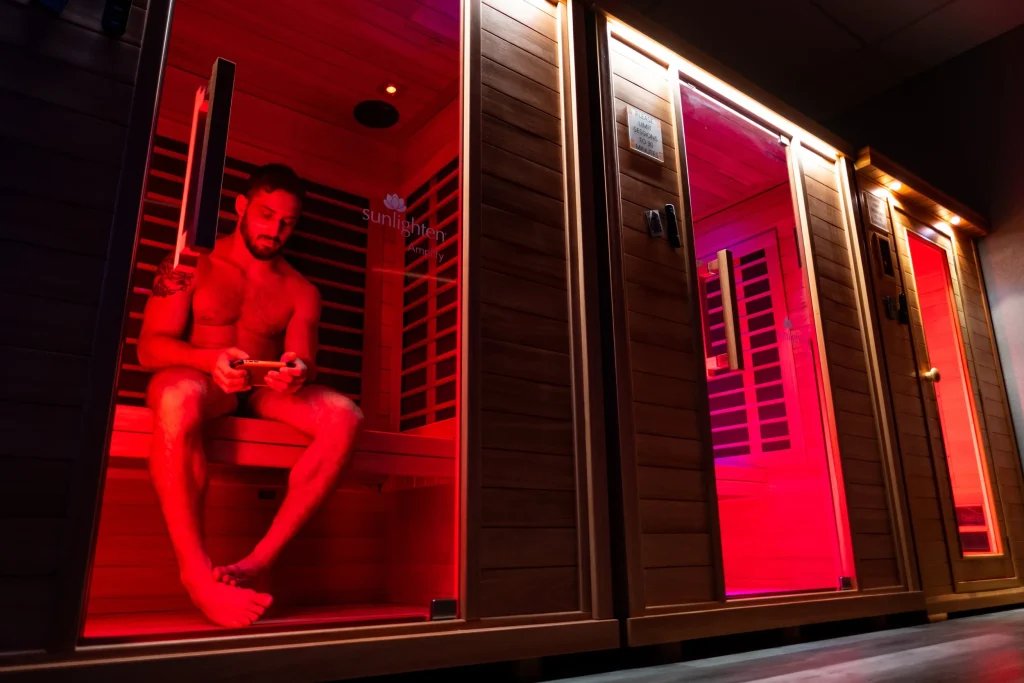
How Does Red Light Therapy Work?
Red light therapy is a simple idea built around a surprisingly complex biological response. It uses specific wavelengths of red and near-infrared light and directs them toward the body. When the light reaches the skin, some of it can travel into the underlying tissue and interact with cellular structures. Researchers study this process under the term photobiomodulation, or PBM.
So, how does red light therapy work inside the body? One of the main areas researchers study is the mitochondria, which help cells produce ATP, the energy cells use to carry out their normal functions. Certain wavelengths may influence mitochondrial activity and other cellular signals. These changes have led scientists to investigate possible applications in areas such as muscle recovery, skin health, and tissue function.
The treatment is different from therapies that rely on intense heat. You do not need to feel significant heat for photobiomodulation to occur. Instead, the goal is to use an appropriate wavelength and treatment setup to encourage a biological response.
What Happens When the Light Reaches Your Skin?
Light does not simply sit on the surface of the skin. Depending on its wavelength, some of it can move through the tissue and interact with molecules within cells. The depth and effect can vary based on the wavelength, the tissue, and the way the light is delivered.
Mitochondria receive particular attention in photobiomodulation research. They are responsible for much of the energy production inside our cells. One proposed mechanism involves the interaction of light with cytochrome c oxidase, an enzyme involved in the mitochondrial electron transport chain. Researchers believe this interaction may influence cellular energy production and signaling.
That sounds straightforward, but the actual process involves several pathways working together. Red light does not simply “add energy” to a cell. Instead, light exposure may trigger changes that influence how the cell responds and functions. Researchers are still working to understand the full picture.
Why Are Red and Near-Infrared Light Used?
Red light and near-infrared light are often mentioned together because both can be used for photobiomodulation, but they do not behave in exactly the same way. Their wavelengths differ, which affects how deeply they can interact with tissue.
Red light generally works closer to the surface, making it particularly interesting for applications involving the skin. Near-infrared light has longer wavelengths and can reach deeper tissue, which has made it a subject of research involving muscles and other areas beneath the skin.
This is why the technical details of a light therapy device matter. Two devices may both be described as red light therapy while using different wavelengths and treatment specifications. Looking beyond the name of the treatment gives you a better understanding of what you are actually receiving.
What Does Red Light Do to Cells?
The potential response begins when light interacts with cellular components. Researchers have found that photobiomodulation may influence mitochondrial activity, ATP production, and several signaling pathways. These signals can affect how cells respond to their environment.
Scientists have also studied changes involving reactive oxygen species and calcium signaling. These processes play roles in normal cellular communication and regulation. Researchers are interested in whether light-induced changes can support processes related to inflammation, tissue maintenance, and recovery.
It is important to separate the mechanism from the outcome. Knowing that light can influence a cellular pathway does not automatically prove that a person will experience a particular health benefit. The results can depend on the wavelength, dose, treatment area, and the condition being studied.
Why Are People Interested in Red Light Therapy?
Interest in red light therapy has grown alongside research into recovery, skincare, and general wellness. People who exercise regularly may be interested in whether light-based treatments can complement their recovery routine. Others are more interested in maintaining healthy-looking skin or exploring non-invasive wellness options.
Recovery is one of the areas that continues to attract research. Physical activity places temporary stress on muscles and other tissues, and scientists have investigated whether photobiomodulation can influence some of the processes involved in recovery. The findings are promising in some areas, although results are not consistent across every study.
The same balanced approach applies to skin health. Researchers have explored how red light may affect cellular processes within the skin and whether those changes can contribute to improvements in certain aspects of skin appearance. It is better to think of these effects as gradual biological responses rather than expecting an immediate transformation.
Does Red Light Therapy Really Work?
There is a scientific basis for photobiomodulation, and research shows that certain wavelengths of light can affect biological processes. The more important question is what those changes mean for a person in the real world.
The evidence varies depending on the specific use. Studies also differ in their wavelengths, devices, treatment schedules, and exposure levels. Because of these differences, a result from one study cannot automatically apply to every red light therapy device or every individual.
A realistic view is therefore the most useful one. Red light therapy is an active area of scientific research with several promising applications, but it is not a universal solution. Its potential benefits should be considered alongside the quality of the evidence available for the specific goal.
Choosing a Local Wellness Setting
If you are interested in trying light therapy, convenience can make a difference because wellness routines are easier to maintain when they fit naturally into your schedule. For people living in South Jordan, Utah, a local facility can provide an accessible option without making the treatment feel like a major commitment.
KuulClub offers red light therapy as part of its wellness services in South Jordan. The location also serves people from nearby communities across the Salt Lake Valley, making it a practical option for those who live or work in the surrounding area.
Still, location should not be the only consideration. It is worth understanding what type of equipment a facility uses, what the session is designed to support, and whether the service matches your personal wellness goals.
Red Light Therapy vs. Sauna
Red light therapy and sauna sessions often appear in the same wellness conversations, but they work in different ways. A sauna uses heat to create a physiological response, while photobiomodulation relies on specific wavelengths of light. Red light therapy therefore does not need the intense heat associated with a traditional or infrared sauna.
That difference can help you decide which approach makes sense for your routine. Someone interested in recovery may explore both, but they should understand that they provide different experiences and work through different mechanisms.
For people around South Jordan, West Jordan, Riverton, Herriman, Sandy, Draper, and Bluffdale, local access can make it easier to explore different wellness options while choosing treatments based on individual goals rather than trends.
What Should You Know Before Trying Red Light Therapy?
The best starting point is to understand what the treatment can realistically offer. Research continues to explore how red and near-infrared light interact with cells, and scientists are still learning which applications have the strongest evidence.
Before a session, consider your reason for trying the treatment and learn about the equipment and wavelengths being used. If you have a medical condition, take medication that can increase light sensitivity, or have concerns about whether light therapy is suitable for you, speak with a qualified healthcare professional before starting.
What Happens Inside the Cells?
The most interesting part of red light therapy happens beneath the surface. When red or near-infrared light reaches tissue, certain molecules inside cells can absorb some of that light. Researchers believe this interaction can influence cellular activity, particularly within the mitochondria. This is one of the main reasons photobiomodulation has become an important area of scientific research.
Mitochondria are responsible for much of the energy production that keeps cells working. One proposed mechanism involves cytochrome c oxidase, an enzyme within the mitochondrial respiratory chain. Researchers believe that light absorption may influence electron transport and mitochondrial activity, which can then affect ATP production and other cellular signals.
The process is not as simple as turning cellular energy up or down. Light can trigger several signals at the same time, and the response depends on factors such as wavelength, intensity, tissue type, and treatment conditions. Scientists are still working to understand how these mechanisms interact and why different tissues can respond differently.
How Does Light Affect Cellular Signaling?
The initial interaction between light and cellular components can lead to a series of secondary responses. Research has explored changes involving ATP, reactive oxygen species, calcium, nitric oxide, and other signaling molecules. These signals can influence processes that help cells communicate and respond to their environment.
This is important because cellular signaling connects the initial light exposure with the broader biological response. Researchers have investigated whether these changes can influence processes related to inflammation, tissue maintenance, cell growth, and recovery. However, the existence of a biological mechanism does not automatically mean that every advertised benefit has been proven in humans.
That distinction is especially important when reading about red light therapy online. A laboratory finding can help explain why a treatment might work, but clinical research is needed to determine whether that mechanism produces a meaningful benefit for people.
Why Does the Amount of Light Matter?
More light is not necessarily better. Photobiomodulation research suggests that biological responses can depend on the amount of light delivered as well as the wavelength and treatment conditions. Some research describes this as a dose-dependent or biphasic response, where different levels of exposure can produce different effects.
This helps explain why professional equipment focuses on specific wavelengths and treatment parameters rather than simply producing the brightest possible light. The goal is to deliver an appropriate amount of energy to the intended tissue.
It also means that two devices that look similar may not provide the same treatment. Their wavelength, power, treatment area, and other technical characteristics can differ. When comparing red light therapy options, those details are more meaningful than the appearance of the device alone.
Can Red Light Therapy Support Muscle Recovery?
Muscle recovery is one of the areas where photobiomodulation has received considerable attention. Researchers have studied whether red and near-infrared light can influence muscle soreness, strength recovery, fatigue, and other outcomes following exercise.
The evidence is encouraging in some areas, but it is not completely consistent. A 2025 systematic review of whole-body photobiomodulation found only five eligible studies involving 105 physically active participants and did not find clear improvements in fatigue biomarkers or exercise performance.
Other research has reported more positive findings. A recent systematic review and meta-analysis found that photobiomodulation may help reduce delayed-onset muscle soreness and support some measures of muscle strength recovery, although the researchers also noted limitations in the available evidence.
So, the most accurate way to describe red light therapy for recovery is as a potential supportive tool, not a guaranteed shortcut. It may complement a good recovery routine, but it cannot replace adequate sleep, nutrition, hydration, and appropriate training.
What About Skin Health?
Skin is another area where red light therapy has attracted significant interest. Red wavelengths can interact with relatively superficial tissue, which makes them relevant to research involving skin cells and tissue function.
Scientists have investigated photobiomodulation in relation to processes such as cellular activity, tissue repair, and inflammation. Some research also explores how these effects may relate to the appearance and overall condition of the skin. The potential benefits depend on the treatment protocol and the specific concern being studied.
This is why claims about skin should be kept realistic. Red light therapy is not an instant cosmetic treatment, and results can vary from person to person. Its potential effects are linked to biological processes that take place within the tissue rather than an immediate change that everyone will experience.
Why Does Wavelength Matter?
Wavelength is one of the most important parts of photobiomodulation. Red and near-infrared light occupy different parts of the spectrum, and their interaction with tissue can therefore differ. Reviews of PBM commonly discuss red wavelengths in the visible range and near-infrared wavelengths beyond it, with the exact range varying between studies and applications.
Red light generally receives more attention for superficial applications, while near-infrared light is often studied for deeper tissues. However, wavelength alone does not determine the outcome. The amount of light delivered, treatment area, exposure, and other technical factors also matter.
This is one reason it is difficult to judge a treatment simply by saying that a device “uses red light.” The details behind the light are what determine how the treatment is delivered.
Is Red Light Therapy the Same as Infrared Sauna?
No. The two can appear together in wellness routines, but they work through different mechanisms. Red light therapy uses specific wavelengths of light to influence biological processes. An infrared sauna primarily uses infrared energy to create heat and produce a heat-based physiological response.
The distinction matters because the word infrared can make the treatments sound more similar than they actually are. A red light therapy session is not simply a cooler version of an infrared sauna. The purpose and method of treatment are different.
Someone interested in recovery may choose to explore both approaches, but each should be understood on its own terms. The right choice depends on what the person wants from the treatment and how it fits into their overall wellness routine.
What Does the Research Tell Us So Far?
The science behind photobiomodulation has developed considerably, but researchers still have questions about the exact mechanisms and the best treatment conditions. Current reviews support the idea that red and near-infrared light can interact with cellular systems and influence processes involving mitochondria, ATP, reactive oxygen species, calcium, and other signaling pathways.
At the same time, clinical results can vary. Studies use different wavelengths, equipment, doses, treatment schedules, and target tissues. This makes it difficult to apply one research finding to every red light therapy session.
The clearest takeaway is that photobiomodulation has a genuine scientific basis, but its potential benefits should be considered according to the specific goal and the quality of the evidence available. That balanced view gives a much better understanding of what red light therapy can realistically offer.
What Can You Realistically Expect From Red Light Therapy?
Red light therapy has become popular because it offers a non-invasive approach to wellness and has a growing body of research behind it. Still, it is important to separate realistic expectations from the more dramatic claims you may see online. The treatment may support certain cellular processes, but that does not mean everyone will notice the same results or experience them at the same pace.
Your goal also matters. Someone interested in post-workout recovery may have different expectations from someone exploring light therapy for skin health. The research behind each application can vary, so it makes more sense to consider the evidence for the specific reason you are using the treatment rather than treating red light therapy as one solution for everything.
How Often Should You Use Red Light Therapy?
There is no single schedule that works for every person or every device. Research studies use different wavelengths, light intensities, treatment areas, and exposure schedules, so their results cannot always translate into one universal routine.
A sensible approach is to follow the guidance provided for the specific equipment being used and avoid assuming that longer or more frequent sessions will automatically produce better results. Consistency and an appropriate treatment approach are more useful than simply increasing exposure.
If you are using a professional wellness service, ask about the recommended schedule for the equipment and the goal you have in mind. This is especially helpful when you are new to light-based treatments.
Is Red Light Therapy Safe?
For many people, red light therapy is considered a well-tolerated, non-invasive treatment when used appropriately. Unlike ultraviolet light, the red and near-infrared wavelengths used in photobiomodulation do not work by causing the type of skin damage associated with UV exposure.
That does not mean every situation is risk-free. Temporary effects such as warmth, mild redness, or eye discomfort can occur, depending on the treatment and individual sensitivity. Following the equipment’s safety guidance is important, particularly when the treatment involves light directed toward the face or eyes.
People with specific medical conditions, photosensitivity, or medications that increase sensitivity to light should speak with a healthcare professional before using light-based treatments.
Common Myths About Red Light Therapy
One common misconception is that red light therapy works simply because red light is warm. That is not the main principle behind photobiomodulation. The treatment relies on specific wavelengths interacting with biological tissue, and it does not require the intense heat produced by a sauna.
Another misconception is that more exposure always means better results. Research does not support such a simple rule. The biological response can depend on the amount of light delivered, wavelength, and other treatment conditions. More is not automatically better.
It is also inaccurate to describe red light therapy as a replacement for medical treatment. Although researchers continue to study its potential applications, wellness treatments should not take the place of appropriate medical care when a health condition requires professional attention.
Who May Want Professional Guidance?
Most people can learn the basics of red light therapy without needing medical supervision, but certain situations deserve extra care. If you have a condition that makes you sensitive to light or take medication that can increase photosensitivity, discussing the treatment with your healthcare provider is a good idea.
Professional guidance can also help when you are considering red light therapy for a specific health concern rather than general wellness. A healthcare professional can help you understand whether light therapy is appropriate and whether another treatment would make more sense for your situation.
For people exploring wellness services in South Jordan and the surrounding Salt Lake Valley, the same principle applies: understand the purpose of the treatment, know what the equipment is designed to do, and choose a routine that fits your individual needs.
Can Red Light Therapy Replace Other Recovery Methods?
No. Red light therapy works best as a possible addition to a balanced wellness routine rather than a replacement for the basics. Sleep, adequate nutrition, hydration, sensible exercise, and recovery time all have a much broader role in supporting overall health.
For someone who exercises regularly, for example, light therapy may be considered alongside other recovery habits. It should not become a reason to ignore fatigue, continue training through pain, or reduce the time your body needs to recover.
This balanced approach also applies to skincare and general wellness. A treatment can complement an existing routine without becoming the foundation of it.
What Questions Should You Ask Before a Session?
Before trying red light therapy, it is reasonable to ask what wavelengths the equipment uses and what the session is intended to support. You can also ask how the facility approaches eye protection, treatment positioning, and general safety.
If you are comparing options around South Jordan, West Jordan, Riverton, or Herriman, these questions can tell you more about a service than marketing language alone. The same applies if you are traveling from areas such as Sandy, Draper, or Bluffdale.
A good wellness experience should leave you with a clear understanding of what you are doing and why. You should never feel pressured to accept claims that sound too good to be true.
Frequently Asked Questions
How does red light therapy work?
Red light therapy uses specific wavelengths of red and near-infrared light that can interact with biological tissue. Researchers believe this interaction can influence cellular processes, including mitochondrial activity and cellular signaling. The exact response depends on factors such as wavelength, light intensity, treatment conditions, and the tissue being treated.
What is photobiomodulation?
Photobiomodulation is the scientific term commonly used for the biological effects produced when certain wavelengths of light interact with cells and tissues. Red and near-infrared light are commonly studied in this field.
Does red light therapy use heat?
Not as its primary mechanism. Red light therapy relies on specific wavelengths of light rather than intense heat. This makes it different from both traditional and infrared sauna treatments.
Can red light therapy help with muscle recovery?
Research suggests that photobiomodulation may support certain aspects of exercise recovery, although results vary between studies. It is best considered a potential addition to a broader recovery routine rather than a guaranteed solution.
Can red light therapy support skin health?
Skin health is one of the areas researchers have studied with photobiomodulation. Research has explored its potential effects on cellular activity and processes involved in maintaining healthy-looking skin. Results can vary depending on the treatment and the individual.
Is red light therapy the same as infrared sauna therapy?
No. Red light therapy uses specific wavelengths of light to influence biological processes, while an infrared sauna primarily uses infrared energy to produce heat. They have different mechanisms and provide different types of wellness experiences.
Is red light therapy safe for everyone?
Not necessarily. Many people tolerate it well when used appropriately, but individual circumstances matter. Anyone with photosensitivity, certain medical conditions, or medications that increase sensitivity to light should seek professional advice before starting.
Final Thoughts
Red light therapy sits at an interesting point between emerging science and modern wellness. Researchers have identified several ways that red and near-infrared light may interact with cells, particularly through mitochondrial activity and cellular signaling. Those mechanisms help explain why scientists continue to investigate its potential for recovery, skin health, and other applications.
At the same time, good information requires realistic expectations. The evidence differs between applications, and results can depend on the wavelength, treatment conditions, and individual. Red light therapy is not a replacement for medical care or the fundamentals of a healthy lifestyle. Used thoughtfully, however, it can be an interesting addition to a broader wellness routine.
Related Reading
-
Red Light Therapy — Related Reading
- The Complete Guide to Red Light Therapy for Recovery and Wellness
- How Does Red Light Therapy Work?
- Red Light Therapy for Muscle Recovery
- Red Light Therapy for Skin Health
- Red Light Therapy vs Infrared Sauna
- How Often Should You Use Red Light Therapy?
- Common Myths About Red Light Therapy
- Is Red Light Therapy Safe?
References
- National Center for Complementary and Integrative Health (NCCIH) — Research and educational information on complementary health approaches and light-based therapies.
- PubMed / National Library of Medicine — Peer-reviewed research on photobiomodulation, cellular mechanisms, exercise recovery, and skin health.
- Cleveland Clinic — Educational information on red light therapy, potential uses, and safety considerations.
- Harvard Health Publishing — Evidence and limitations surrounding emerging wellness and light-based therapies.
- Peer-reviewed photobiomodulation research — Clinical and experimental studies examining the biological effects of red and near-infrared light.
Caution
This article is provided for general educational and informational purposes only. It is not a substitute for medical advice, diagnosis, or treatment. If you have a medical condition, take medication, are pregnant, have increased sensitivity to light, or are unsure whether red light therapy is appropriate for you, consult a physician or qualified healthcare professional before starting treatment.