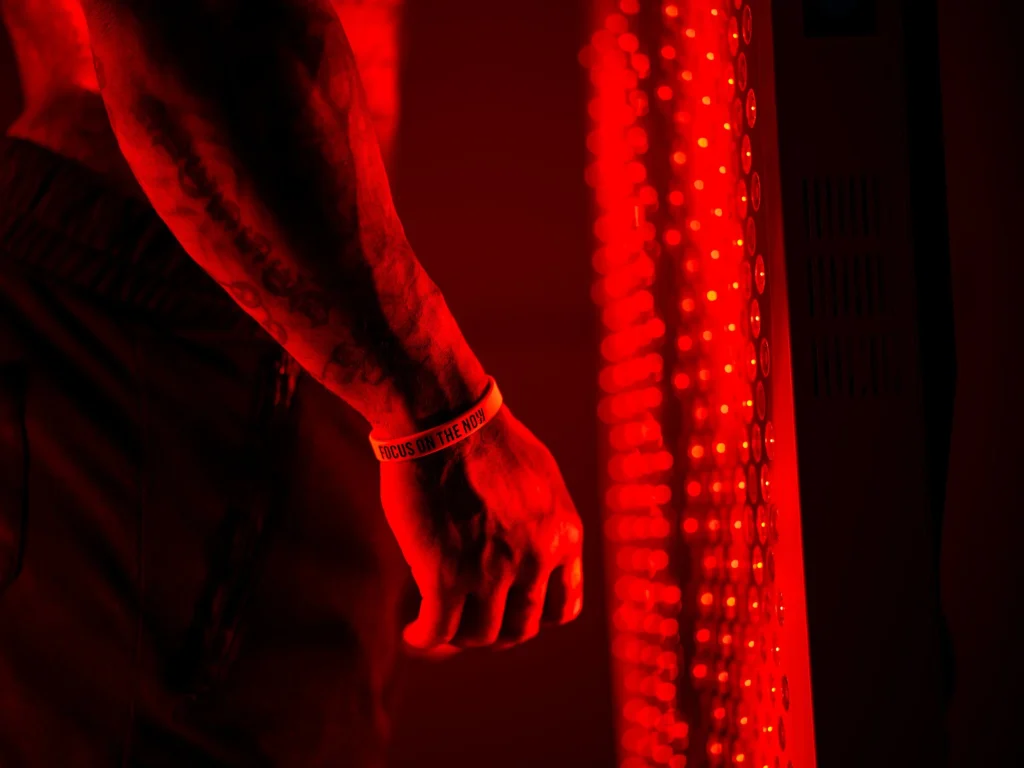
What Is Red Light Therapy?
Red light therapy is a wellness treatment that uses specific wavelengths of red and near-infrared light. These wavelengths can interact with cells in the body and may influence several natural biological processes. Unlike ultraviolet light, red light therapy does not use UV radiation to produce its intended effects. It has attracted interest in areas such as exercise recovery, skin health, and general wellness.
You may also hear the term photobiomodulation when researching this type of light treatment. The terms can describe closely related approaches, although devices can differ in their wavelengths, intensity, design, and intended use. Today, light-based treatments are available in wellness centers, recovery spaces, clinics, and home devices. For people searching for red light therapy in South Jordan, UT, it has become another option to consider as part of a broader wellness routine.
How Does Red Light Therapy Work?
The basic concept is relatively simple. Certain wavelengths of light reach the skin and can be absorbed by biological tissues. Researchers believe that this interaction may influence cellular activity and signaling. Mitochondria are often part of this discussion because they help cells produce and manage energy.
The exact response depends on several factors. Wavelength, light intensity, exposure time, treatment area, and the device itself can all matter. This means that results from one device or research study should not automatically apply to every treatment. Understanding these differences is important when evaluating claims about light therapy.
Research into photobiomodulation has explored several potential applications. These include exercise recovery, pain-related outcomes, wound healing, and skin-related concerns. Some areas have stronger evidence than others, so it is better to look at each potential benefit separately rather than treating red light therapy as a universal solution.
Why Has Red Light Therapy Become So Popular?
Interest in this treatment has grown alongside the wider recovery and wellness industry. People are looking for ways to support their routines without adding another demanding workout or complicated habit. Light therapy can fit into a quiet period of the day, which makes it appealing to people with different wellness goals.
For an active person, the main interest may be recovery after exercise. Someone else may care more about skin appearance or general self-care. This flexibility has helped make light-based treatments relevant to a wider audience. People searching for red light therapy near Salt Lake City, West Jordan, or Riverton may be considering it for very different reasons.
It is also important to keep expectations realistic. Red light therapy is not a replacement for sleep, good nutrition, appropriate exercise, or professional medical treatment. Instead, it can be considered as one possible addition to a balanced wellness routine.
Red Light Therapy for Recovery
Recovery is one of the most discussed applications of photobiomodulation. Exercise creates normal physical stress, and the body needs time to recover between training sessions. Researchers have examined whether specific light exposure can influence processes associated with muscle function, soreness, and recovery.
The findings are interesting, but they are not identical across every study. Different research uses different devices, wavelengths, exposure patterns, and participant groups. Because of this variation, it is difficult to promise the same result for everyone. A sensible approach is to view light therapy as a potential recovery tool rather than a guaranteed shortcut.
This can be particularly relevant for people who maintain active lifestyles. Runners, cyclists, gym users, and recreational athletes may all have an interest in recovery-focused wellness. Someone looking for red light therapy in Herriman, Sandy, or Draper may want to combine it with other healthy habits that support rest and recovery.
How Can It Fit Into a Recovery Routine?
A good recovery routine usually involves more than one activity. Sleep gives the body time to recover, while appropriate nutrition provides the energy and nutrients needed for normal biological functions. Hydration and sensible training habits also play important roles. Light therapy can sit alongside these habits rather than replacing them.
This broader approach is useful because recovery is not a single process. Your body responds to training, rest, nutrition, stress, and sleep as parts of the same overall picture. Adding one wellness treatment does not cancel out poor recovery habits elsewhere. The best routine is usually the one that remains practical and consistent over time.
Red Light Therapy and Skin Health
Skin health is another major area of interest. Researchers have studied red and near-infrared wavelengths for their potential effects on several processes within the skin. Some research has explored collagen-related activity, skin appearance, and other changes associated with healthy-looking skin.
The appeal is partly connected to how different this approach is from UV-based tanning. Red light therapy is not intended to create a tan and does not rely on ultraviolet radiation. However, not every device has the same specifications, so users should pay attention to what a particular system is actually designed to do.
Skin-related results can also take time. A single session should not be expected to create dramatic changes. As with many wellness practices, consistency and realistic expectations matter. Anyone using light therapy for a specific skin condition should also consider advice from a qualified healthcare professional.
Red Light Therapy vs. Infrared Sauna
Red light therapy and infrared sauna are sometimes mentioned together because both are popular in modern recovery spaces. However, they are not the same treatment. Light therapy uses specific wavelengths of light, while an infrared sauna primarily creates a heated environment that raises body temperature.
The experience is also different. A sauna session involves heat and sweating, while light therapy does not depend on creating a hot environment. This distinction can help people decide which option fits their goals and preferences. Some wellness routines may include both, but each should be understood as a separate modality.
For people exploring recovery services around South Jordan, West Jordan, Riverton, Herriman, Sandy, Draper, Bluffdale, and Salt Lake City, this comparison can be useful. Instead of asking which treatment is simply “better,” it makes more sense to ask what you want from the experience. Your goal might be muscle recovery, relaxation, skin care, or a combination of wellness practices.
Who Might Be Interested in This Treatment?
Red light therapy can appeal to people with different wellness priorities. Active adults may explore it as part of a recovery routine, while others may be interested in supporting their skin-care goals. Some people may simply enjoy adding a low-effort wellness treatment to their existing routine.
That does not mean it is appropriate for everyone. Individual health circumstances can affect whether a particular treatment is suitable. Certain medications, medical conditions, or light sensitivities may require extra consideration. If you have concerns about using light therapy, speaking with a qualified healthcare professional is the safest way to get advice specific to your situation.
Is Red Light Therapy a Recovery Treatment or a Wellness Treatment?
It can be useful to think of it as both, depending on the purpose. Research has investigated photobiomodulation in several health and performance-related areas, while wellness facilities may offer it as part of a broader recovery experience. The terminology can sometimes make the treatment sound more complicated than it is.
What matters most is understanding what the treatment can realistically offer. Red light therapy may support certain biological processes, but it does not replace medical care or healthy lifestyle habits. Its role should be considered alongside the rest of your routine rather than in isolation.
Red Light Therapy for Muscle Recovery
Muscle recovery is one of the most common reasons people explore photobiomodulation. Research suggests that certain light wavelengths may influence cellular processes involved in muscle function and recovery after physical activity. However, results can vary depending on the treatment method and individual response.
For active people in South Jordan, West Jordan, Riverton, and nearby Salt Lake Valley communities, this can be an interesting addition to an existing recovery routine. It should complement the basics, such as adequate sleep, hydration, nutrition, and sensible training.
Can It Help With Exercise-Related Soreness?
Some research has examined whether light exposure may reduce muscle soreness or support recovery after exercise. The evidence is promising in some areas, but it is not strong enough to guarantee the same result for everyone. Different studies use different wavelengths, devices, and treatment approaches.
That is why it is better to think of red light therapy as a potential recovery tool, rather than a quick solution for soreness. Your overall recovery habits still have a much larger role in how your body responds to training.
Red Light Therapy for Skin Health
Skin health is another well-known area of interest. Certain wavelengths have been studied for their potential effects on collagen-related processes, skin appearance, and normal cellular activity. This has made light therapy popular among people who want to include another step in their wellness or skincare routine.
Results are generally not something to expect from a single session. Consistency and realistic expectations are important. If you are considering treatment for a specific skin condition, professional medical advice is still the better starting point.
How Often Should You Use Red Light Therapy?
There is no single frequency that works for everyone. The appropriate schedule can depend on the device, wavelength, treatment goal, and manufacturer guidance. More exposure does not automatically mean better results, so following the recommended use for a specific device is important.
If you are trying light therapy for the first time, paying attention to how your body and skin respond is sensible. A wellness routine should feel manageable rather than becoming another activity you feel pressured to do every day.
Can You Combine Red Light Therapy With Other Recovery Methods?
Red light therapy can be part of a broader recovery routine that includes stretching, massage, exercise, sauna, and adequate rest. These methods work in different ways, so they should not be treated as interchangeable. For example, an infrared sauna focuses on heat exposure, while photobiomodulation focuses on specific wavelengths of light.
This is particularly useful to understand when comparing red light therapy and infrared sauna. Someone looking for recovery and wellness services near Sandy, Draper, Herriman, or Bluffdale may find that different modalities suit different goals. The best choice depends on what you want from your recovery routine.
What Does the Research Actually Tell Us?
Research into photobiomodulation is growing, but the evidence is not equally strong for every claimed benefit. Some areas have encouraging findings, while others still need more high-quality research. Device differences also make it difficult to apply one study’s results to every treatment available today.
For that reason, red light therapy should be approached with realistic expectations. It may offer useful support for certain wellness goals, but it should not be presented as a cure-all. Understanding both its potential and its limitations is the best way to make an informed decision.
Is Red Light Therapy Safe?
Red light therapy is generally considered a low-risk wellness treatment when used as directed. It does not use ultraviolet radiation, but different devices can vary in wavelength, intensity, and recommended exposure. Following the instructions for the specific device is important rather than assuming that every system works the same way.
If you have a medical condition, take medication that increases light sensitivity, or have concerns about using light-based treatments, speak with a qualified healthcare professional first. Stop the session if you experience unusual discomfort or irritation.
Common Myths About Red Light Therapy
One common myth is that stronger or longer exposure will always provide better results. That is not necessarily the case. The wavelength, intensity, exposure time, and treatment goal all matter, so more exposure is not automatically better.
Another misconception is that this treatment can replace sleep, nutrition, exercise, or other recovery habits. It cannot. Light therapy should be viewed as one possible addition to a healthy wellness routine rather than a shortcut to recovery or better health.
Who Should Consider Professional Guidance?
Most people can learn about light therapy and follow the recommended instructions for a suitable device. However, certain health circumstances may require additional care. People who are pregnant, have a medical condition, use photosensitizing medication, or have concerns about light exposure should discuss the treatment with a healthcare professional before starting.
This is also important when choosing a wellness service. Whether you are looking for red light therapy in South Jordan, Salt Lake City, West Jordan, Riverton, Herriman, Sandy, Draper, or Bluffdale, the location is only one part of the decision. Understanding the treatment and whether it fits your individual needs should come first.
Frequently Asked Questions
What is red light therapy used for?
Red light therapy is commonly explored for recovery, skin health, and general wellness. Research has investigated several other applications, but the strength of evidence can vary between different uses.
Does red light therapy help muscle recovery?
Some research suggests that specific light exposure may support certain aspects of exercise recovery and muscle function. However, results are not guaranteed, and healthy recovery habits remain essential.
Can red light therapy improve skin?
Research has examined its potential effects on skin appearance and processes related to collagen. Results can vary based on the device, treatment approach, and individual response.
How often should you use red light therapy?
There is no single schedule that applies to every device or goal. Follow the manufacturer’s recommended use for the specific system rather than assuming that more frequent sessions will produce better results.
Is red light therapy the same as an infrared sauna?
No. Red light therapy uses specific wavelengths of light, while an infrared sauna creates a heated environment using infrared energy. They provide different experiences and should not be considered interchangeable.
Can you combine red light therapy with other recovery treatments?
It can be included alongside other wellness practices such as exercise, stretching, massage, or sauna. Each method works differently, so combining treatments should be based on your goals and comfort.
Final Thoughts
Red light therapy has become a popular option for people interested in recovery, skin health, and overall wellness. Research continues to explore how specific wavelengths interact with biological processes, with encouraging findings in several areas. At the same time, not every claim has the same level of scientific support, so realistic expectations are important.
For people in South Jordan and the surrounding Salt Lake Valley, this type of treatment can be considered as part of a broader wellness routine. Whether your goal is supporting recovery after exercise, caring for your skin, or simply exploring modern recovery options, focus on sensible use and consistency.
The most important point is that red light therapy should complement the fundamentals of good health. Quality sleep, balanced nutrition, hydration, appropriate physical activity, and adequate recovery remain the foundation of wellness.
References
- National Center for Complementary and Integrative Health (NCCIH) — Photobiomodulation and light-based therapy research
- PubMed / National Library of Medicine — Research studies on photobiomodulation, exercise recovery, and skin health
- Cleveland Clinic — Red light therapy overview, potential uses, and safety considerations
- Harvard Health Publishing — Evidence and limitations surrounding red light therapy
- Peer-reviewed research on photobiomodulation — Clinical and experimental studies examining red and near-infrared light
Related Reading
- How Does Red Light Therapy Work?
- Red Light Therapy for Muscle Recovery
- Red Light Therapy for Skin Health
- Red Light Therapy vs Infrared Sauna
- How Often Should You Use Red Light Therapy?
- Common Myths About Red Light Therapy
- Is Red Light Therapy Safe?
 A Note for Our Readers
The information shared in this article has been carefully researched using available studies, expert sources, and reliable health information. Our goal is to help readers better understand the topic and make informed decisions about their wellness. However, everyone’s health and circumstances are different, and research continues to evolve. This content is for educational and informational purposes only and should not be considered medical advice. If you have any health concerns or questions about whether a particular practice is right for you, please consult a qualified healthcare professional or physician