Common Sauna Mistakes to Avoid
A sauna can be one of the simplest ways to slow down after a busy day. You step into a warm room, leave your phone behind, sit for a while, and let yourself relax. But if you’re new to sauna use, there are a few things that aren’t always obvious. Knowing what to do before entering, how to behave around other people, and when to leave can make the experience much more comfortable.
This is where sauna etiquette comes in. It isn’t about following a complicated rulebook. In most cases, it simply means keeping yourself clean, respecting the shared space, following the facility’s rules, and being considerate of everyone else using the sauna.
The details can vary depending on where you are. A sauna at a gym may have different expectations from one at a spa, hotel, or private wellness facility. Some traditional sauna cultures also have customs that may be unfamiliar to first-time users. When in doubt, the rules posted by the facility should always take priority.
Why Sauna Etiquette Matters
A sauna is a small, enclosed environment, so your behavior can affect everyone around you more than it would in a larger room. Heat can make smells more noticeable, sound can carry easily, and even small amounts of sweat or moisture can affect the shared benches.
For example, wearing a strong fragrance may not seem like a problem in a normal room, but it can become much more noticeable once the temperature rises. Similarly, a loud phone conversation might be fine in another part of a gym but can quickly disturb people who are using the sauna to relax.
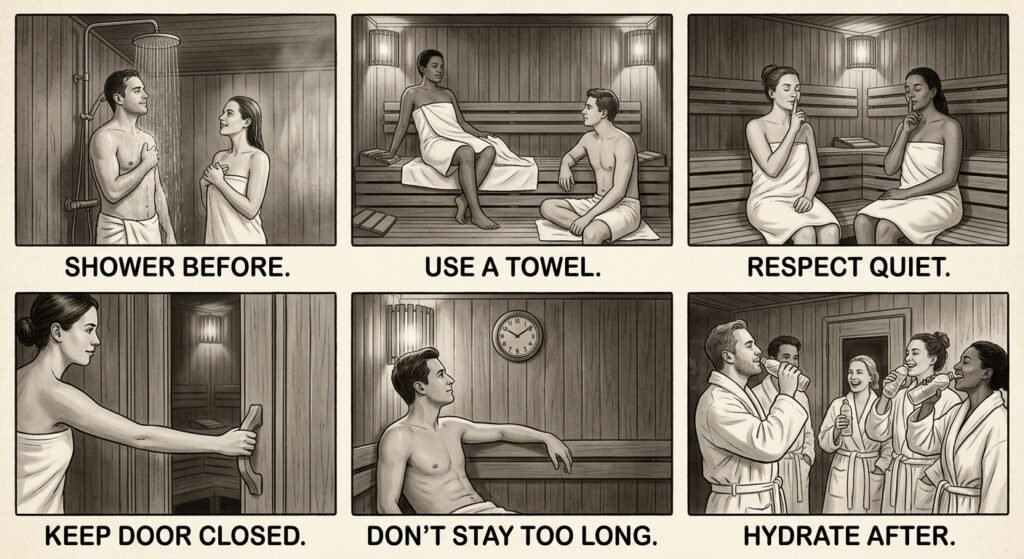
Good etiquette isn’t about making sauna use formal or uncomfortable. It’s about creating an environment where everyone can enjoy their time without unnecessary distractions. A few simple habits—such as showering beforehand, using a towel, keeping your voice down, and respecting personal space—can make a significant difference.
Shower Before Entering
One of the easiest mistakes to avoid is entering a shared sauna without showering first. If you’ve just finished exercising, your skin may already be covered with sweat, deodorant, sunscreen, or other products. Taking a quick shower before entering helps you arrive clean and keeps the shared environment more pleasant.
A shower also makes sense from a practical standpoint. Heat causes you to sweat, and anything already sitting on your skin can become more noticeable once you’re inside a hot room. Strong smells from lotions, deodorants, and other products may become particularly noticeable in an enclosed space.
You don’t need to turn your pre-sauna shower into a complicated routine. A simple rinse is usually enough. The goal is to enter clean and ready to share the space respectfully with other people.
Always Use a Towel
Using a towel on the sauna bench is another simple habit that can easily be overlooked. Sitting directly on the wood allows sweat to collect on the surface, which isn’t ideal in a shared environment.
A towel creates a barrier between your body and the bench and helps absorb moisture during your session. It also makes it easier to leave the space clean for the next person.
If you’re visiting a gym or spa, check whether towels are provided. If they aren’t, bringing one with you is a good habit. Some facilities may have separate expectations for where you should place the towel or how the benches should be used, so following their specific instructions is always the safest option.
Keep Strong Fragrances to a Minimum
Perfume, cologne, heavily scented lotions, and other strong fragrances can become surprisingly intense inside a sauna. Heat can make scents more noticeable, and the enclosed environment means everyone in the room is sharing the same air.
What smells pleasant to you may be distracting or uncomfortable for another person. This is particularly important in a small sauna where there isn’t much airflow compared with an open room.
Arriving clean after a shower and avoiding heavy fragrances is usually the simplest solution. If you use skincare products before or after your sauna session, consider applying strongly scented products outside the sauna instead.
Keep Conversations Considerate
Not everyone enters a sauna for the same reason. Some people enjoy having a quiet conversation with a friend, while others use the time as an opportunity to disconnect and relax.
There isn’t necessarily a rule that every sauna must be completely silent. However, keeping your voice at a reasonable level is a good general practice, especially when other people are sitting quietly.
The same applies to phone calls, videos, music, and other audio. What seems like a normal speaking volume outside the sauna can feel much louder inside a small enclosed room. Being aware of the atmosphere and adjusting your behavior accordingly is a simple part of good shared-space etiquette.
Don’t Treat Heat Like a Competition
One of the biggest mistakes people can make is assuming that staying longer automatically makes a sauna session better. It doesn’t.
Sauna exposes the body to heat, and people respond to that heat differently. Someone who has used a sauna regularly may be comfortable with an environment that feels intense to a beginner. Your tolerance can also change depending on hydration, recent exercise, sleep, the temperature of the sauna, and how you’re feeling that particular day.
There is no prize for being the last person to leave. If the heat becomes uncomfortable, you can end your session. And if you begin experiencing dizziness, nausea, unusual weakness, lightheadedness, confusion, or other concerning symptoms, leave the sauna and cool down rather than trying to finish a predetermined amount of time.
Our previous guide, How Long Should You Stay in a Sauna?, goes into more detail about session duration and the factors that can influence a comfortable routine.
Don’t Ignore Hydration
Because sauna sessions commonly involve sweating, hydration is something worth considering before and after spending time in the heat. This becomes particularly relevant if you’ve exercised beforehand or have already spent part of the day in a warm environment.
You don’t need to force yourself to drink excessive amounts of water or try to maximize how much you sweat. Instead, make normal hydration part of your overall routine and pay attention to how you feel.
If you’re already feeling significantly dehydrated, unusually tired, or unwell, adding more heat may not be the best choice. Sometimes the smartest sauna decision is to wait until you’re feeling better rather than trying to maintain a planned routine.
Don’t Bring Your Phone Into the Sauna
For many people, one of the best things about sauna time is getting a break from screens, messages, and constant notifications. Bringing your phone into the sauna can take away from that experience, but in a shared setting there is another reason to think twice about it. Phones have cameras, and other people may not feel comfortable being around a camera-equipped device while they’re using a sauna, even if you’re only checking a message or changing a song.
Unless the facility specifically allows phones, it’s better to leave yours in a locker or another secure place outside the sauna. Apart from being more respectful to others, this also gives you an opportunity to properly disconnect for a few minutes. If you genuinely need to make a call or respond to something important, stepping outside is a much better option than disturbing everyone inside.
Respect Personal Space
Saunas are often much smaller than the other areas of a gym or wellness facility, which means personal space becomes especially important. When the room is relatively empty, you may have plenty of room to sit comfortably. But as more people arrive, spreading your towel, water bottle, or other belongings across the bench can make the space unnecessarily difficult for others to use.
A little awareness goes a long way. Give people enough room to sit comfortably without making the environment feel crowded, and move your belongings if someone needs a place to sit. You don’t have to sit directly next to another person when there is plenty of room, but you should also avoid behaving as though an entire bench belongs to you.
This is one of the simplest parts of good sauna etiquette because it doesn’t require any complicated rules. Just be aware of the people around you and make reasonable adjustments when the space becomes busier.
Don’t Pour Water on Sauna Stones Without Permission
If you’ve seen traditional sauna practices, you may have noticed people pouring water over heated stones to create steam. While this is a normal part of some sauna traditions, you shouldn’t assume that every sauna is designed for it. Some facilities specifically allow it, while others prohibit adding water to the stones because of the equipment, ventilation, or operating procedures.
Before doing anything that changes the heat or humidity inside a shared sauna, check the facility’s instructions. If there is no clear guidance, ask a member of staff instead of guessing. A practice that is perfectly normal in one sauna may be inappropriate in another.
The same principle applies to temperature controls and other equipment. Don’t adjust something simply because you would prefer a different environment. In a shared sauna, everyone should be able to enjoy the space without one person changing the conditions for everyone else.
Don’t Bring Food Into the Sauna
Eating inside a sauna isn’t necessary and can quickly create an unpleasant environment for other people. Food smells can become more noticeable in a hot, enclosed room, while crumbs, packaging, and spills can make the benches and floor harder to keep clean.
If you need to eat, it’s better to do so before or after your session in an area where food is permitted. The same applies to snacks, chewing gum, and anything else that could leave behind a smell or mess. Shared wellness spaces work best when everyone makes an effort to leave them clean for the next person.
Drinks can be a little different depending on the facility. Some places may allow water bottles inside, while others may have specific rules about what can be brought into the sauna. Always follow the rules of the location you’re visiting rather than assuming every facility operates the same way.
Avoid Using Strongly Scented Products During Your Session
Skincare and personal-care products can become more noticeable when exposed to heat. Oils, lotions, perfumes, and strongly scented creams may create an odor that feels much stronger inside a small sauna than it did when you applied them elsewhere.
There is also the issue of residue. Certain products can transfer onto the benches, making the surface uncomfortable for the next person. This is another reason why applying skincare products before entering a shared sauna isn’t usually the best idea.
If you have a skincare routine you enjoy, consider doing it after your sauna session instead. Once you’ve finished, showered, and cooled down, you can apply your normal products without affecting the shared environment.
Don’t Assume More Sweat Means a Better Session
Sweating is one of the most obvious effects of sitting in a sauna, so it’s easy to assume that producing more sweat means you’re getting more out of the experience. But sweat volume isn’t a reliable measure of whether a sauna session was better or more effective. People naturally sweat at different rates, and temperature, humidity, hydration, activity level, and individual differences can all influence how much you perspire.
Trying to maximize sweating can also encourage you to stay in the heat longer than you’re comfortable with. Instead of focusing on how much sweat you can produce, pay attention to how your body actually feels. If you’re comfortable and relaxed, there’s no reason to keep extending the session simply because you aren’t sweating as much as someone else.
Sauna isn’t a competition. You don’t need to leave the room completely drenched or exhausted for the experience to be worthwhile. A comfortable session that fits naturally into your routine is a much more sensible approach.
Don’t Go Straight From an Intense Workout Into Extreme Heat
Sauna and exercise can work well together, but the timing matters. A demanding workout already raises your body temperature and can cause significant sweating. Going immediately from an intense training session into a very hot environment may therefore feel much more demanding than using a sauna on a rest day.
If you enjoy sauna after exercise, give yourself some time to cool down first. Take a normal recovery break, drink fluids according to your needs, and pay attention to how you’re feeling before deciding whether you want to continue with heat exposure. You don’t need to rush directly from your final set into the sauna.
It’s also perfectly reasonable to skip the sauna after a particularly demanding workout. Recovery isn’t about adding as many activities as possible. Sometimes your body simply needs food, hydration, rest, and sleep. Sauna can be an optional part of your routine rather than something you have to complete after every training session.
For a more detailed look at the timing of sauna around exercise, see Sauna Before or After a Workout? Benefits of Sauna After Workout.
Don’t Ignore the Way You Feel
One of the most important mistakes to avoid is ignoring your body’s signals because you have already decided how long you want to stay. A timer can tell you how much time has passed, but it cannot tell you whether you are currently tolerating the heat well.
Your response can change from one day to another. Poor sleep, dehydration, recent exercise, illness, stress, or simply feeling tired can all affect how a sauna session feels. A session that was comfortable last week may feel much more intense today, and that’s completely normal.
If you begin feeling dizzy, lightheaded, nauseous, unusually weak, confused, or otherwise unwell, leave the sauna and move somewhere cooler. You don’t need to wait until your planned time is finished. Ending a session early isn’t a failure; recognizing when you’ve had enough is part of using heat responsibly.
Don’t Compare Your Routine With Someone Else’s
It’s natural to look around a sauna and notice that someone else has been sitting there much longer than you. However, their routine doesn’t tell you what your routine should be. People have different levels of experience, different heat tolerances, and different reasons for using a sauna.
The temperature and type of sauna can also make a major difference. Someone who regularly uses a traditional sauna may be comfortable with conditions that feel intense to a beginner, while another person may prefer the lower-temperature environment of an infrared sauna.
Rather than trying to match someone else’s session, focus on your own comfort and circumstances. There is no benefit in staying longer simply because another person is still sitting inside.
Give Yourself Time to Cool Down
Once your session is finished, give yourself a little time to transition out of the heat. Moving into a cooler environment allows your body to gradually return toward its normal temperature and gives you an opportunity to notice how you feel after the session.
Some sauna traditions involve deliberate cold exposure between rounds, but that isn’t something you have to add to every sauna visit. A simple cooldown can be enough. You can sit somewhere comfortable, take a normal shower if appropriate, and give yourself time to recover before returning to your usual activities.
If you do combine sauna with cold exposure, it’s important to understand that this introduces another form of thermal stress. You don’t need to add increasingly extreme temperatures to make your wellness routine more effective.
Give Other People the Experience They Came For
One of the easiest ways to understand sauna etiquette is to remember that everyone may be using the space for a different reason. One person may want a quiet place to relax after work, another may be winding down after a workout, and someone else may simply enjoy spending a few minutes in the heat as part of their regular routine.
You don’t need to make every shared sauna completely silent, but being aware of the atmosphere can make a big difference. If everyone is sitting quietly, keeping your conversation low is considerate. If people are casually talking, there’s usually no need to feel uncomfortable about having a quiet conversation yourself. The key is to avoid behavior that unnecessarily takes away from someone else’s experience.
Respecting personal space, keeping noise under control, avoiding strong fragrances, and following the facility’s rules are simple habits that make a shared sauna more enjoyable without making the experience feel overly formal.
What Should You Wear in a Sauna?
What you should wear depends heavily on the type of facility and its specific rules. Some saunas require swimwear, some recommend a towel, and others may have different expectations based on local sauna traditions. There isn’t one clothing rule that applies to every sauna.
The best approach is to check the facility’s guidelines before your first visit. If you’re using a gym or spa, the staff should be able to tell you exactly what is expected. Following those rules is more important than copying what you’ve seen people wearing in another sauna.
Whatever the clothing requirements are, cleanliness and comfort should remain priorities. Avoid wearing anything that could create a strong odor or leave unnecessary residue on the benches, and always use a towel as directed by the facility.
Don’t Stay in the Sauna When You’re Feeling Unwell
Another mistake is assuming that you should continue with your sauna routine even when you’re already feeling sick, unusually tired, or physically uncomfortable. Heat can place additional demands on the body, so it’s important to consider how you’re feeling before entering.
If you’re unwell or unsure whether heat exposure is appropriate for you, it may be better to skip the session. Sauna should not be treated as something you have to complete simply because it is part of your normal routine.
People with certain medical conditions or those taking medications that affect heat tolerance may also need individual guidance. If you’re uncertain about whether sauna is appropriate for you, speaking with a qualified healthcare professional is the safest approach.
Don’t Assume Every Sauna Works the Same Way
A traditional sauna, infrared sauna, gym sauna, spa sauna, and private home sauna can all have different temperatures, humidity levels, operating instructions, and expectations. Assuming that what works in one environment automatically applies to another can lead to unnecessary mistakes.
For example, a practice that is normal in a traditional sauna may not be appropriate in an infrared sauna. Similarly, a private sauna gives you much more control over the environment than a shared public sauna.
Before using a new sauna, take a moment to understand the space. Check the temperature controls, posted rules, towel requirements, and any instructions about water or other equipment. A few minutes of preparation can prevent confusion once you’re inside.
Don’t Turn Sauna Into a Test of Willpower
There is sometimes a tendency to treat heat tolerance as something that should constantly be improved. People may compare temperatures, session lengths, or how much they sweat and assume that being able to tolerate more means they’re doing better.
That mindset isn’t necessary. Sauna can be beneficial as part of a balanced wellness routine without becoming a challenge that you have to win. Your goal doesn’t need to be the hottest temperature or longest possible session.
A more practical approach is to find a level of heat and duration that feels comfortable for you. As you gain experience, your preferences may change naturally, but there’s no need to force that process.
Common Questions About Sauna Etiquette
Should I shower before using a sauna?
Yes, showering before entering a shared sauna is a good habit. It removes sweat, deodorant, sunscreen, lotions, and other products from your skin and helps keep the shared environment cleaner and more comfortable.
Should I sit on a towel in the sauna?
In most shared sauna settings, using a towel on the bench is a sensible practice. It provides a clean barrier and helps prevent sweat from directly contacting the bench. However, always follow the specific rules of the facility you’re visiting.
Can I talk inside a sauna?
Talking isn’t automatically inappropriate, but keeping your voice at a reasonable level is considerate. If other people are using the sauna quietly, avoid loud conversations, phone calls, music, or videos that could disturb them.
Can I bring my phone into a sauna?
It’s generally better to leave your phone outside a shared sauna unless the facility specifically permits it. Apart from distractions, other people may have privacy concerns about cameras being used in an enclosed space.
Can I pour water over sauna stones?
Only if the sauna and facility specifically allow it. Some traditional saunas are designed for this, while others prohibit it. Never assume that the same practice is acceptable everywhere.
Is it okay to use skincare products inside a sauna?
It’s generally better to apply lotions, oils, perfumes, and other personal-care products outside the sauna. Strong scents can become more noticeable in the heat, and some products can leave residue on shared benches.
How long should I stay in a sauna?
There isn’t one perfect duration for everyone. Your experience, sauna temperature, hydration, recent exercise, and individual tolerance all matter. The important thing is to avoid treating session length as a competition and to leave if you feel uncomfortable or unwell.
Final Thoughts
Good sauna etiquette is ultimately about being considerate. You don’t need to memorize a long list of rules before your next session. Arriving clean, using a towel, respecting personal space, keeping conversations at a reasonable volume, and following the facility’s instructions will cover most of the basics.
It’s equally important to pay attention to your own body. Sauna should not become a competition over temperature, sweating, or session length. If the heat feels too intense or you begin to feel unwell, leaving the sauna is the right decision. A comfortable session is more important than proving that you can tolerate more heat than someone else.
The same principle applies to your overall routine. You don’t need to copy another person’s schedule or assume that a particular sauna tradition is appropriate everywhere. Learn how your chosen facility works, make reasonable adjustments based on how you’re feeling, and give yourself time to become familiar with the experience.
When everyone follows these simple habits, a shared sauna becomes cleaner, quieter, and more comfortable for everyone. That’s really what good sauna etiquette comes down to—enjoying the space while making sure the people around you can enjoy it too.
References
- Laukkanen J, Laukkanen T, Kunutsor S. Cardiovascular and Other Health Benefits of Sauna Bathing: A Review of the Evidence. Mayo Clinic Proceedings.
- Hussain J, Cohen M. Clinical Effects of Regular Dry Sauna Bathing: A Systematic Review.
- American College of Sports Medicine. Exercise and Fluid Replacement.
Related Reading
- Benefits of Infrared Sauna for Recovery
- Traditional Sauna Benefits Beyond Relaxation
- Sauna Before or After a Workout? Benefits of Sauna After Workout
- Common Sauna Mistakes to Avoid
- Is Sauna Safe for Everyone?
- Sauna and Better Sleep: Is There a Connection?
- Traditional vs. Infrared Sauna: Everything You Need to Know