Cold Plunge vs Ice Bath: What’s the Difference?
Ask two different people what a cold plunge is, and you’ll probably get two different answers.
One person pictures a stainless steel tub, precisely chilled, sitting in a recovery studio. Another imagines a bathtub at home, filled with tap water and a few bags of ice from the corner store.
Both are describing cold water immersion. But they’re not describing the same experience.
The terms get used interchangeably so often that most people never stop to ask whether there’s an actual difference. There is—and understanding it can change how you think about which option fits your goals, your budget, and how seriously you want to take your recovery routine.
What an Ice Bath Actually Is
An ice bath is exactly what it sounds like.
You fill a tub with cold tap water, then add ice until the temperature drops to wherever you’re aiming for. Maybe that’s a cooler in the garage, a stock tank in the backyard, or a bathtub upstairs.
The appeal is obvious. It’s accessible. Almost anyone can put one together with a few bags of ice and a container large enough to sit in.
But that accessibility comes with a tradeoff.
Every ice bath is slightly different from the last. The amount of ice, how long it’s been sitting, the starting water temperature, even the room temperature that day—all of it affects the final result. One session might land at a genuinely cold temperature. The next might be several degrees warmer, simply because less ice was used or the water sat out longer before you stepped in.
There’s also the matter of consistency during the session itself. As your body heat transfers into the water and the ice melts, the temperature doesn’t stay fixed. It drifts, usually upward, for the entire time you’re in there.
None of this makes an ice bath ineffective. It simply means the experience is variable by nature.
What a Cold Plunge Actually Is
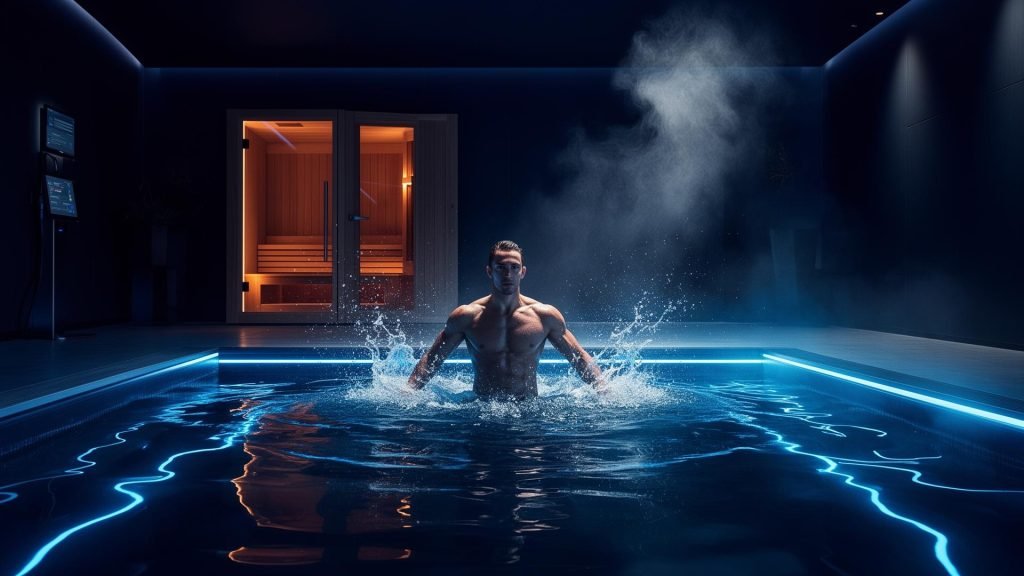
A professionally maintained cold plunge works differently.
Instead of relying on melting ice, it uses a filtration and chilling system to hold the water at a set temperature—and keep it there. The water is also filtered and circulated, rather than sitting static the way it does in a tub full of ice.
That means the temperature you experience on a Monday session is close to identical to what you’ll experience on Thursday. There’s no guesswork about how much ice to add or how long to wait before getting in.
For people who are serious about making cold exposure a regular part of their routine, that consistency matters. It’s much easier to notice how your body responds over time when the variable you’re testing—cold exposure—stays the same from one session to the next.
It also removes a layer of hassle. There’s no buying ice, no cleanup, no guessing whether today’s setup will actually be cold enough.Comparing the Two, Category by Category
The Real Difference Isn’t Just the Temperature
At first glance, an ice bath and a cold plunge seem to accomplish the same thing. Both involve immersing your body in cold water for a short period of time, and both are commonly used as part of a recovery routine.
The difference becomes more noticeable once you experience them more than once.
With an ice bath, every session depends on variables that are difficult to control. The amount of ice you use, the starting temperature of the water, how long the tub has been sitting, and even the weather can all influence the experience.
Some days the water feels noticeably colder.
On other days, it begins warming almost as soon as you get in because the ice melts and your body naturally transfers heat into the water.
That doesn’t make an ice bath ineffective.
It simply means that each session is likely to feel slightly different from the one before it.
A professionally maintained cold plunge is designed to remove much of that variability.
Instead of relying on melting ice, the water is continuously chilled, filtered, and circulated to maintain a consistent temperature throughout the session. The result is a more predictable experience every time you step into the water.
For people who include cold exposure regularly, that consistency can make it easier to understand how their body responds over time.
It’s Not Just About the Water
Temperature is only part of the experience.
Preparation also plays a role.
Setting up an ice bath usually means filling a tub, adding enough ice, waiting for the temperature to drop, and cleaning everything up afterwards. If you’re only doing it occasionally, those extra steps may not seem like a problem.
Over time, however, they can become part of the reason people skip sessions altogether.
A cold plunge removes much of that preparation.
The water is already cooled, filtered, and ready to use. Instead of spending time getting everything ready, you can simply focus on the session itself.
That convenience may not seem important at first, but it often becomes one of the biggest differences for people who make cold exposure a regular habit.
Does It Make a Difference for Recovery?
This is where the conversation becomes more interesting.
If both methods expose the body to cold water, does the way you reach that temperature really matter?
Current research on cold water immersion is typically conducted under carefully controlled conditions, where water temperature and immersion time remain consistent throughout each session.¹²
Those controlled conditions help researchers understand how the body responds without additional variables affecting the results.
An ice bath can still provide cold exposure, but the temperature naturally changes as the ice melts and the water absorbs body heat. That doesn’t mean the experience is ineffective—it simply means it’s less predictable from one session to the next.
For someone trying cold water therapy from time to time, that may not matter very much.
For someone hoping to build a consistent recovery routine, however, a stable environment can make it easier to evaluate how their body responds over weeks and months.
Choosing the Right Option
Neither approach is automatically better.
An ice bath is affordable, accessible, and a practical way to explore cold water therapy without investing in specialised equipment.
A professionally maintained cold plunge offers greater consistency, less preparation, and a more controlled environment for people who plan to include cold exposure as part of their long-term recovery routine.
Ultimately, the right choice depends less on the equipment itself and more on how you plan to use it.
The best recovery routine isn’t always the most advanced.
It’s the one you can maintain consistently over time.
Does the Difference Actually Matter for Recovery?
This is where a lot of people get stuck.
If both methods involve cold water, does the delivery method really change the outcome?
To some extent, yes.
Much of the research on cold water immersion and muscle soreness has been conducted using controlled temperatures and set immersion times.¹ ² That level of control is part of what makes the findings meaningful—researchers know exactly what conditions produced the results they observed.
An inconsistent ice bath doesn’t necessarily cancel out the potential benefits of cold exposure. But it does make it harder to know exactly what you’re getting from session to session, which makes it harder to gauge how your own body is responding over time.
If your goal is casual, occasional cold exposure, an ice bath is a perfectly reasonable way to start. If your goal is to build a consistent routine and actually track how it affects your recovery, a properly maintained system removes a lot of the guesswork.
Starting Simple vs. Building a Habit
There’s nothing wrong with beginning at home.
Plenty of people try an ice bath a few times, decide they enjoy the practice, and only later look for a more consistent option. That’s a completely reasonable way to explore cold water therapy before committing further.
Others skip that step entirely and head straight to a facility where the water is already dialed in, filtered, and ready.
Neither path is wrong. What matters is being honest about your goals. If you’re testing the waters, pun intended, an ice bath is a low-commitment way to start. If you already know you want cold exposure to be part of a longer-term recovery routine, the consistency of a well-maintained setup will likely serve you better in the long run.
Frequently Asked Questions
Is an ice bath as effective as a cold plunge? Both involve cold water immersion, and both may offer similar benefits when conditions are comparable. The main difference is consistency—the maintained, filtered version holds a stable temperature every session, while an ice bath can vary based on how much ice is used and how long the water has been sitting.
Which is colder, an ice bath or a cold plunge? Neither is inherently colder than the other. Both can be set to a wide range of temperatures. The real difference is that the maintained version holds that temperature steady, while an ice bath’s temperature drifts as the ice melts.
Can I make my own cold plunge at home? Yes, some people build DIY setups using stock tanks, chillers, and filtration systems. This gets closer to the consistency of a professionally run setup, though it usually requires more upfront investment than a simple ice bath.
Is it safe to do an ice bath every day? This depends on your health history and how your body responds to cold exposure. People with cardiovascular conditions, uncontrolled blood pressure, or other medical concerns should speak with a healthcare professional before making cold exposure a daily habit.³
Why do gyms and recovery studios use cold plunges instead of ice baths? Consistency and hygiene are the main reasons. A filtered, temperature-controlled system is easier to maintain at a stable, clean standard for repeated daily use by many people, compared to manually preparing an ice bath each time.
Does the type of container matter? Less than the temperature and consistency do. A bathtub, stock tank, or dedicated cold plunge unit can all work—what matters more is whether the temperature stays predictable and the water stays clean.
Final Thoughts
The difference between a cold plunge and an ice bath isn’t really about which one is “better” in some universal sense. It’s about consistency, convenience, and what you’re trying to get out of the practice.
An ice bath is an accessible way to try cold water therapy without much commitment. The maintained, studio version offers a more predictable, repeatable experience for people who want cold exposure to be a genuine part of their recovery routine.
If you’re curious which one fits your own goals, the best way to find out is to actually try both and pay attention to how your body responds—not just in the moment, but over the following days and weeks.
If you’d like to feel the difference yourself, you can try an intro session and experience the consistency firsthand
References
- Cleveland Clinic. Cold Plunge: Benefits, Risks & Safety.
- Bleakley CM, Costello JT. Cold-water immersion (cryotherapy) for preventing and treating muscle soreness after exercise. Cochrane Database of Systematic Reviews.
- National Library of Medicine (PubMed). Cold Water Immersion Research.
Related Reading
- Cold Plunge: The Complete Beginner’s Guide to Cold Water Therapy
- Cold Plunge or Sauna First? How to Choose the Best Order for Recovery
- Cold Plunge vs Ice Bath: What’s the Difference?
- How Long Should You Stay in a Cold Plunge?
- The Best Time to Take a Cold Plunge: Before or After Exercise?
- Common Cold Plunge Mistakes Beginners Should Avoid
- Is Cold Plunge Safe? Benefits, Risks, and Precautions
- Cold Plunge and Muscle Recovery: What Does the Research Say
⚠️ A Note for Our Readers
The information shared in this article has been carefully researched using available studies, expert sources, and reliable health information. Our goal is to help readers better understand the topic and make informed decisions about their wellness. However, everyone’s health and circumstances are different, and research continues to evolve. This content is for educational and informational purposes only and should not be considered medical advice. If you have any health concerns or questions about whether a particular practice is right for you, please consult a qualified healthcare professional or physician.