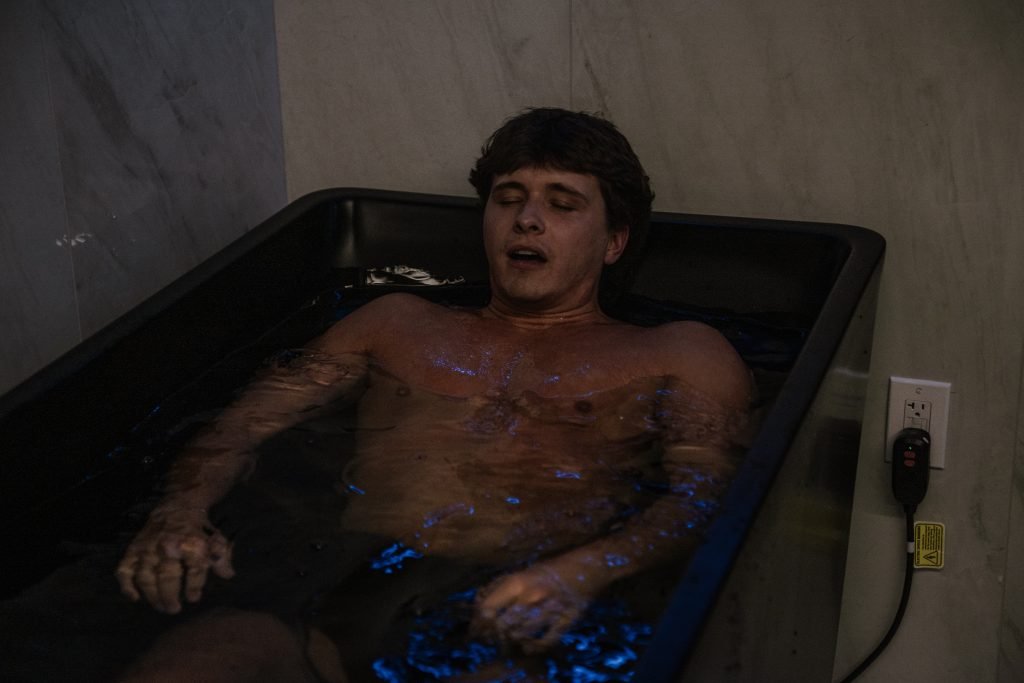
The Question Sounds Simple. The Answer Usually Isn’t.
Picture two people arriving at the same recovery studio. The first has just finished a demanding leg workout. Their muscles feel heavy, they’re sweating, and all they can think about is recovering well enough to train again tomorrow. The second person hasn’t exercised yet. They’re meeting friends for an early trail run and have decided to start the morning with a cold plunge because they enjoy the feeling of being fully awake before heading outside. Both are stepping into the same cold water. Both believe they’re doing the right thing. Yet they’re using cold exposure for completely different reasons. This is exactly why one of the most common questions surrounding cold water therapy doesn’t have a simple yes-or-no answer.
Should you take a cold plunge before exercise or after it?
If you’ve searched online, you’ve probably seen confident opinions on both sides.
Some articles suggest that cold plunges belong at the end of every workout because recovery should always come first.
Others recommend starting your day with cold exposure, arguing that it sharpens focus and prepares both your mind and body for movement.
Neither explanation tells the full story.
Timing isn’t really the decision you’re trying to make.
Your goal is.
Why Timing Has Become Such a Popular Topic
Cold plunges have moved well beyond the world of elite sport.
A few years ago, most people associated cold water immersion with professional athletes or dedicated endurance competitors. Today, it’s just as common to hear office workers, weekend runners, CrossFit members, cyclists, and busy parents talking about their recovery routines.
As cold exposure has become more accessible, so have the questions surrounding it.
People want to know:
Should I use it before lifting weights?
Is it better after a run?
What about rest days?
Does the time of day actually matter?
These are reasonable questions.
The challenge is that they’re often answered without considering why someone is using a cold plunge in the first place.
A marathon runner preparing for months of endurance training doesn’t recover the same way as someone attending three gym sessions each week.
Likewise, someone looking for a moment of calm before work isn’t necessarily trying to improve athletic performance at all.
Once you recognise that people use cold exposure for different reasons, it becomes much easier to understand why timing isn’t universal.
Recovery Goals Aren’t All the Same
One mistake that’s easy to make is assuming everyone walks into a cold plunge expecting the same result.
They don’t.
For one person, the goal may be reducing post-workout soreness.
Another might simply enjoy the refreshing feeling that follows a session.
Someone else could be using cold exposure as part of a broader wellness routine alongside quality sleep, balanced nutrition, and regular movement.
Those goals naturally influence when a cold plunge makes the most sense.
That’s why asking, “Should I go before or after exercise?” can sometimes be the wrong starting point.
A better question is:
“What am I hoping this session will do for me?”
Once you answer that, choosing the right time becomes much easier.
The Internet Loves Simple Rules
Search for recovery advice online and you’ll quickly notice a pattern.
“Always cold plunge after training.”
“Never cold plunge before lifting weights.”
“Morning sessions are best.”
Statements like these spread quickly because they’re easy to remember.
Real life, however, is rarely that straightforward.
Your body doesn’t know whether you’ve read the latest fitness trend on social media.
It responds to factors such as your training load, sleep quality, stress levels, nutrition, overall health, and the intensity of your exercise.
Cold water therapy is only one part of that picture.
Treating it like a magic solution—or believing there’s one perfect schedule that works for everyone—often creates more confusion than clarity.
There’s a Better Way to Think About the Question
Instead of dividing cold plunges into two camps—before exercise or after—think of them as a tool.
Like any recovery tool, the value comes from using it at the right time for the right purpose.
A hammer isn’t useful because it’s always the best tool.
It’s useful because it’s the right tool for certain jobs.
Cold water therapy works the same way.
There will be situations where using it before exercise makes sense.
There will also be times when using it afterwards aligns more closely with your recovery goals.
The key isn’t memorising a rule.
It’s understanding the reason behind the timing.
That’s where current research becomes far more helpful than social media opinions.
Rather than asking people to follow a universal schedule, researchers look at how different timing strategies affect the body under different conditions.
And that’s exactly where we’ll go next.
When Timing Starts to Matter
Imagine finishing one of your toughest workouts of the week.
Your legs feel heavy. Your breathing has settled, but the effort is still fresh in your mind. At that moment, stepping into cold water can feel incredibly appealing. It’s easy to understand why so many people associate a cold plunge with recovery.
Now imagine a completely different scenario.
You’ve just arrived at the gym. You’re feeling a little sluggish after sitting at a desk all day, and you’re looking for something that helps you switch gears mentally before training.
The same cold plunge now serves a very different purpose.
Nothing about the water has changed.
Only the timing has.
That’s why conversations about cold water therapy rarely make sense without talking about context first.
Before Exercise: Preparing Your Mind Isn’t the Same as Preparing Your Muscles
Many people who enjoy a cold plunge before exercise aren’t necessarily chasing a physical advantage.
They’re chasing a mental one.
Cold water demands your attention almost immediately. The first few moments encourage slower, more controlled breathing, and for many people, that creates a feeling of alertness that’s difficult to ignore.
Some describe it as hitting a reset button.
Others simply say they feel more awake.
If you’re heading out for an early morning hike, preparing for a long day, or trying to shake off mental fatigue before a workout, that feeling can be valuable.
But it’s important not to confuse feeling ready with performing better.
They’re related, but they’re not the same thing.
Research looking at pre-exercise cold exposure doesn’t support the idea that everyone will automatically run faster, lift heavier, or perform better simply because they spent a few minutes in cold water beforehand.
Performance depends on many variables—your warm-up, sleep, nutrition, hydration, training history, and the demands of the activity itself.
Cold exposure is only one small piece of that puzzle.
After Exercise: Why Recovery Gets Most of the Attention
There’s a reason recovery conversations almost always involve the period after exercise.
That’s when your body shifts its priorities.
Training is finished.
The work has been done.
Now the focus turns toward adapting, repairing, and preparing for whatever comes next.
This is where cold plunges became popular in the first place.
Athletes have experimented with cold water immersion for years because they wanted practical ways to recover between demanding training sessions and competitions. Over time, that practice spread far beyond professional sport.
Today, recreational runners, cyclists, gym members, and people who simply enjoy staying active often include cold water therapy as part of their own recovery habits.
Not because it’s a miracle solution.
But because it fits naturally into the period after physical effort.
The Goal Should Shape the Timing
One of the biggest mistakes people make is searching for a universal schedule.
Recovery doesn’t work that way.
Someone training for their first 10K race has different priorities from someone preparing for a bodybuilding competition.
Likewise, a person exercising three times a week for general health doesn’t need to recover in exactly the same way as an elite athlete training twice a day.
That’s why timing should always follow your objective.
If your priority is feeling mentally refreshed before an activity, your routine may naturally look different from someone whose focus is recovering after repeated high-intensity training sessions.
Neither approach is automatically better.
They’re simply trying to achieve different outcomes.
What the Research Actually Tells Us
One reason this topic generates so much debate is that scientific research rarely produces the simple headlines we see on social media.
Instead of asking whether cold plunges are “good” or “bad,” researchers usually investigate much more specific questions.
How does cold water immersion affect muscle soreness?
Does it influence recovery after endurance exercise?
Could the timing of cold exposure affect long-term adaptations from resistance training?
Because those questions are different, the answers are different too.
Some studies suggest that cold water immersion may help reduce the perception of muscle soreness after demanding exercise.
Other research has explored whether frequent cold exposure immediately after resistance training could influence certain muscle-building adaptations over time.
That doesn’t mean everyone should avoid a cold plunge after lifting weights.
Nor does it mean everyone should use one.
It simply highlights an important principle:
The purpose of your training should influence the purpose of your recovery.
That’s a much more useful way of interpreting the evidence than searching for a single rule that applies to every person and every workout.
Stop Looking for the Perfect Schedule
One interesting thing happens when people become more experienced with recovery.
They stop obsessing over perfect timing.
Instead, they focus on consistency.
A routine that fits naturally into your week is almost always more valuable than one that sounds ideal on paper but rarely happens in real life.
If you only have time for a cold plunge after work, that’s perfectly reasonable.
If mornings fit your lifestyle better, that can work too.
Recovery isn’t judged by the clock.
It’s judged by whether your habits are sustainable enough to support your health and training over months—not just a single session.
So, When Should You Actually Take a Cold Plunge?
After all the discussion, it’s understandable if you’re still hoping for one clear answer.
Should you go before exercise?
Or wait until after?
The honest answer is that both approaches can make sense—but not for the same reason.
If you’re looking for a way to feel mentally refreshed before an activity, a cold plunge beforehand may fit naturally into your routine. Many people enjoy the sense of alertness that follows cold exposure, particularly in the morning or before an outdoor workout.
If recovery is your priority, however, it’s easy to see why so many people choose to plunge after training. Once the workout is over, your focus shifts from performance to helping your body recover and preparing for the next session.
Neither approach is universally better.
What’s important is choosing the timing that supports your goals rather than copying someone else’s routine.
Think Beyond Today’s Workout
One workout rarely determines your long-term progress.
Your habits do.
That’s why it’s worth stepping back and looking at the bigger picture.
Imagine two people.
The first spends hours trying to work out the perfect minute to use a cold plunge but only remembers to do it once every few weeks.
The second doesn’t overthink the timing. They simply include cold water therapy as part of a balanced routine alongside sleep, hydration, nutritious food, and sensible training.
Months later, who’s more likely to have built a sustainable recovery habit?
Probably the second person.
Recovery is rarely about finding the perfect strategy.
It’s about repeating good habits often enough that they become part of your lifestyle.
Cold exposure should support that goal—not become another source of stress.
When Timing Matters Most
Although there’s no universal schedule, there are situations where timing deserves a little more attention.
If you’re preparing for an event that demands maximum strength, speed, or explosive power, think carefully about how your entire warm-up routine is structured instead of focusing only on the cold plunge.
If you’re exercising primarily for general health, consistency usually matters far more than chasing the “ideal” time of day.
And if you’re following a structured programme for competitive sport, your coach or healthcare professional may recommend a recovery plan that’s specific to your training cycle rather than relying on general advice found online.
Context always matters.
That’s one of the biggest lessons modern recovery research continues to reinforce.
Recovery Is Bigger Than One Habit
Cold plunges receive a lot of attention because they’re visible.
They’re dramatic.
And they’re easy to share online.
But they’re only one part of recovery.
Quality sleep.
Balanced nutrition.
Adequate hydration.
Managing training load.
Allowing your body enough time to adapt between demanding sessions.
These habits influence recovery every day, whether you use cold water therapy or not.
That’s why it’s helpful to think of a cold plunge as a supporting tool rather than the centre of your recovery plan.
When the foundations are strong, cold exposure can become another useful piece of the puzzle.
Without those foundations, even the most carefully timed cold plunge is unlikely to make a meaningful difference on its own.
Frequently Asked Questions
Is it better to take a cold plunge before or after exercise?
Neither option is automatically better. The ideal timing depends on whether your goal is mental readiness before activity or recovery after exercise.
Can I take a cold plunge every day?
Many healthy adults choose to include cold water therapy regularly, but frequency should reflect your overall health, training demands, and personal comfort. If you have an underlying medical condition, speak with a healthcare professional before making it part of your daily routine.
Should beginners use a cold plunge before their first workout?
For most beginners, it’s often more helpful to become familiar with cold exposure on its own before experimenting with different timings around exercise.
Does taking a cold plunge immediately after exercise improve recovery?
Some research suggests cold water immersion may help reduce the perception of muscle soreness after demanding exercise. However, recovery is influenced by many factors, including sleep, nutrition, hydration, and overall training load.
Does the time of day matter?
It can, but not in the same way for everyone.
Some people enjoy a morning cold plunge because it helps them feel alert. Others prefer using one after training or later in the day as part of their recovery routine.
The best choice is usually the one you can maintain consistently.
What if I only have time before my workout?
That’s perfectly reasonable.
A routine you can follow consistently is often more valuable than waiting for the “perfect” opportunity that rarely comes.
Final Thoughts
Perhaps the biggest takeaway is that the question itself has been slightly misunderstood.
Instead of asking whether a cold plunge belongs before or after exercise, it may be more useful to ask:
“What am I hoping this session will help me achieve?”
That simple shift changes the conversation.
Recovery isn’t identical for every person, every workout, or every stage of life.
The same is true for cold water therapy.
Whether you choose to plunge before exercise, afterwards, or on a rest day, the timing should reflect your goals—not a trend, a headline, or someone else’s routine.
When cold exposure is combined with quality sleep, balanced nutrition, regular movement, and realistic expectations, it can become one part of a thoughtful, sustainable approach to wellbeing.
And in the long run, that’s far more valuable than finding a single “perfect” moment to step into the water.
References
- American College of Sports Medicine (ACSM). Exercise Recovery Resources.
- National Library of Medicine (PubMed). Cold Water Immersion and Exercise Recovery.
- Cleveland Clinic. Cold Plunge: Benefits, Risks & Safety.
- Mayo Clinic. Cold Therapy and Recovery.
- Bleakley CM, Costello JT. Cold Water Immersion for Preventing and Treating Muscle Soreness After Exercise. Cochrane Database of Systematic Reviews.
Related Reading
Continue exploring cold water therapy with these guides:
- Cold Plunge: The Complete Beginner’s Guide to Cold Water Therapy
- Cold Plunge or Sauna First? How to Choose the Best Order for Recovery
- Cold Plunge vs Ice Bath: What’s the Difference?
- How Long Should You Stay in a Cold Plunge?
- Common Cold Plunge Mistakes Beginners Should Avoid
- Is Cold Plunge Safe? Benefits, Risks, and Precautions
- Cold Plunge and Muscle Recovery: What Does the Research Say?
⚠️ A Note for Our Readers
The information shared in this article has been carefully researched using available studies, expert sources, and reliable health information. Our goal is to help readers better understand the topic and make informed decisions about their wellness. However, everyone’s health and circumstances are different, and research continues to evolve. This content is for educational and informational purposes only and should not be considered medical advice. If you have any health concerns or questions about whether a particular practice is right for you, please consult a qualified healthcare professional or physician.